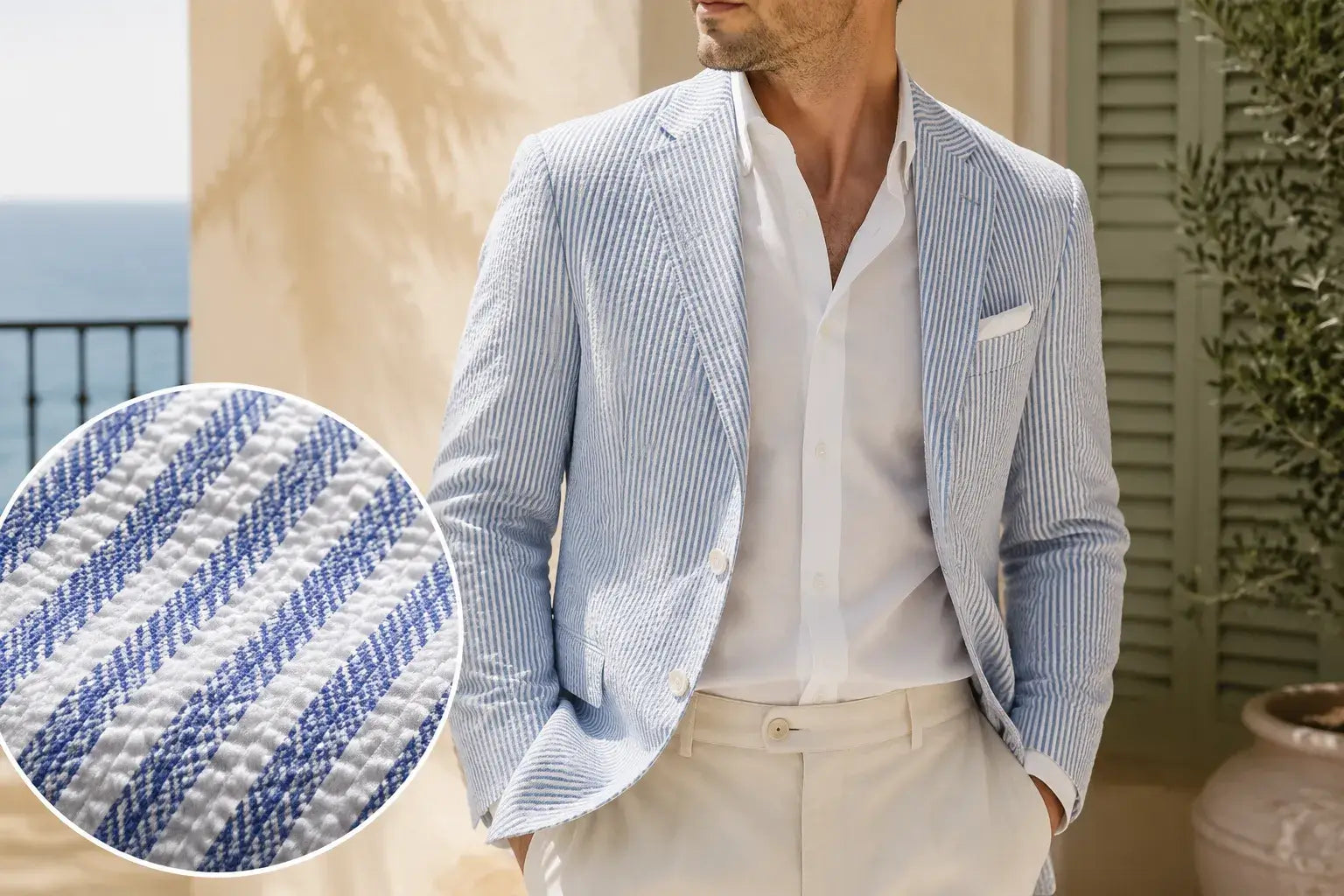



Seersucker fabric is easy to recognize once you know what to feel for.
The surface should not be completely smooth. It should have a raised, puckered texture that looks slightly crinkled before you even wear it.
That texture is the point.
It helps parts of the fabric sit slightly away from the skin, which is why seersucker is used so often in summer shirts, pants, shorts, blazers, suits, and resort clothing.
But not every striped summer fabric is real seersucker. Some fabrics only copy the look with printed stripes. This guide explains what seersucker fabric is, how it is made, why cotton seersucker fabric is popular, which colors and patterns exist, and what to check before buying seersucker clothing or fabric by the yard.
What You'll Learn
By the end, you will know how to recognize real seersucker fabric, why the texture matters, and when cotton seersucker is the better choice.
Start with the texture test, then use the buying checklist before choosing a shirt, blazer, pants, suit, or fabric by the yard.
Quick Answer
Seersucker fabric is a lightweight woven fabric with a raised, puckered texture. It is usually made from cotton or a cotton blend, and the textured surface helps the cloth sit slightly away from the skin in warm weather.
The classic version is blue and white striped cotton seersucker fabric. But seersucker can also be white, navy, black, green, pink, gingham, checked, plaid, tonal, or embroidered.
The most important feature is not the color.
It is the texture.
Real seersucker material should have visible or touchable puckering. If the cloth feels completely smooth and only has printed stripes, it may look like seersucker from a distance, but it is not doing the same job.
For menswear, seersucker is most useful when the fabric feels light but still has enough body to hold a clean shape.
What Is Seersucker Fabric?

Seersucker fabric is a lightweight woven fabric with a puckered surface.
Merriam-Webster defines seersucker as a light fabric of linen, cotton, or rayon that is usually striped and slightly puckered. That definition matters because the texture, not just the stripe, is what makes the fabric seersucker.
The classic version is blue and white striped cotton seersucker fabric, but modern seersucker also comes in white, navy, black, green, pink, checks, gingham, plaid, and embroidered versions.
The word seersucker refers to the fabric itself.
A seersucker suit, seersucker shirt, seersucker pants, or seersucker shorts simply means the garment is made from this puckered material.
That distinction is important when shopping.
A garment can have blue stripes and still not be true seersucker. If the surface is flat, the stripe is doing the visual work, not the weave.
The Fabric Test: Real Seersucker vs Printed Stripe

Not every blue-and-white striped fabric is seersucker.
Real seersucker fabric should pass three simple tests.
The easiest test is touch.
Run your fingers across the fabric. If you can feel raised ridges and shallow valleys, the cloth likely has a real seersucker effect. If it feels like plain cotton with a printed stripe, it is only a summer stripe fabric, not true seersucker material.
The second test is shadow.
Real puckering creates small shadows where the fabric rises and falls. A printed stripe on smooth cotton will look flatter under the same light.
The third test is behavior.
Seersucker should look intentional when slightly crinkled. If the fabric only looks good after heavy pressing, it may not be the right material for a true summer seersucker garment.
Why Is It Called Seersucker?
The word seersucker is commonly traced to a Persian phrase meaning “milk and sugar.”
The Historic New Orleans Collection explains that the phrase refers to the fabric's alternating smooth and textured feel. That origin still describes the cloth well.
Real seersucker has contrast in the surface. Some areas feel smoother, while other areas rise into puckered ridges.
That is why the puckering should not be pressed away. It is part of the fabric's identity.
How Seersucker Fabric Is Made

Seersucker fabric gets its texture from the way the yarns are woven.
In traditional seersucker, some yarns are held under different tension during weaving. This causes parts of the cloth to gather slightly, creating raised and recessed areas.
That is why the fabric looks naturally crinkled.
It is not damage. It is not poor ironing. It is not random wrinkling.
It is built into the cloth.
This is also why seersucker should not be judged like plain cotton poplin. A perfectly smooth surface is not the goal. The puckering is the feature.
Why Seersucker Works In Warm Weather
Seersucker feels cooler because the puckered texture prevents the entire cloth from sitting flat against the skin.
Textile research on cotton seersucker woven fabrics explains that the seersucker effect comes from differences in yarn tension and is studied for comfort-related properties in warm conditions. Related research on seersucker woven fabrics also examines how the three-dimensional surface affects comfort and heat-transfer behavior.
For a shopper, the takeaway is simple: the puckered surface is not just decorative. It changes how the fabric touches the body.
When a flat cotton fabric sticks to the skin, it can trap heat and moisture. Seersucker creates tiny raised areas, which can make the fabric feel drier and less clingy in warm weather.
This does not make seersucker magic air conditioning.
It simply gives the fabric a practical advantage in summer clothing.
That is why seersucker appears so often in shirts, pants, shorts, resort clothing, and spring and summer suits.
For a visual explanation of how seersucker fabric gets its puckered texture and why that texture works so well in summer, this fabric-focused guide is a useful companion.
Cotton Seersucker Fabric

Cotton seersucker fabric is the most traditional and most useful version for summer clothing.
Cotton gives seersucker a natural feel. It helps the fabric stay breathable, soft, and comfortable against the skin.
A 100 cotton seersucker fabric usually feels more natural and breathable than many synthetic-heavy blends.
That said, blends are not always bad.
A small amount of synthetic fiber can add durability, reduce shrinkage, or improve recovery. The trade-off is that the fabric may feel less natural than pure cotton.
For shirts and casual summer clothing, 100% cotton seersucker is often the safest choice.
For tailored garments, the best option is not only about fiber content. It also depends on weight, drape, lining, and how well the jacket holds shape.
A shirt-weight seersucker can be soft and light. A suit-quality seersucker needs more body so the jacket does not collapse.
Seersucker Fabric Colors And Patterns

The classic seersucker fabric is blue and white striped.
That is the version most people recognize, especially in summer shirts and warm-weather tailoring. But seersucker is not limited to one color or pattern.
The key is balance.
Because seersucker already has surface texture, strong color and strong pattern can make the fabric look busy.
For tailored clothing, muted colors usually look more refined. Navy, grey, tonal blue, and soft tan are easier to wear than loud checks or high-contrast novelty colors.
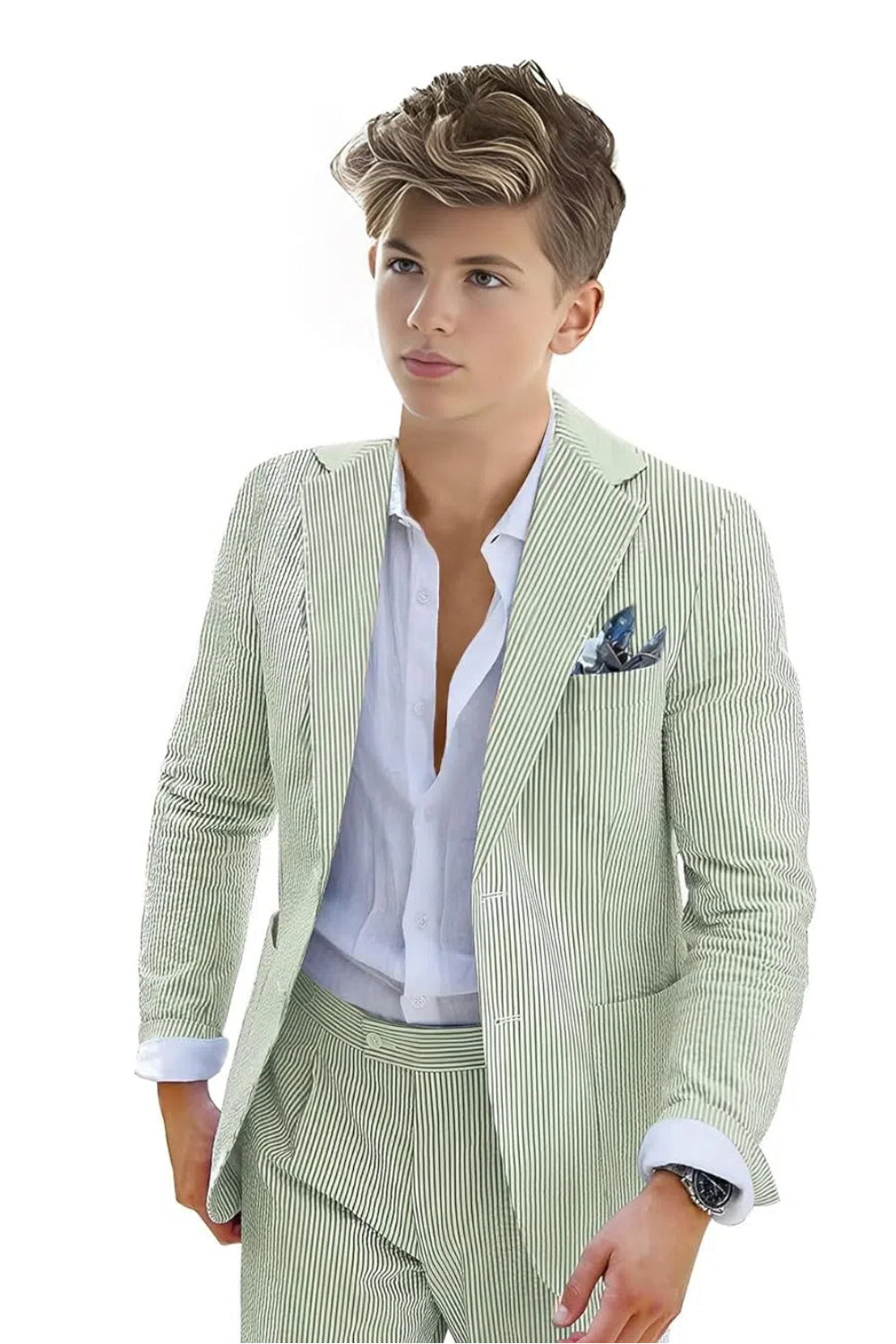
For shirts, shorts, and casual resort clothing, gingham seersucker fabric, green seersucker fabric, pink seersucker fabric, or embroidered seersucker fabric can work well.
For suits and blazers, keep the pattern quieter.
Seersucker Fabric vs Linen

Seersucker and linen are both summer fabrics, but they do not behave the same way.
Linen has a softer, more relaxed drape. It wrinkles naturally and often looks casual, even when tailored.
Seersucker has a more structured texture. Its puckering already looks intentional, so it can feel cleaner in shirts, blazers, and summer suits.
For tailored summer clothing, seersucker can look more controlled than linen.
For relaxed vacation clothing, linen may feel more natural.
If you are choosing between the two for a warm-weather wardrobe, compare both linen suits for men and seersucker options before deciding.
What Is Seersucker Fabric Used For?

Seersucker fabric is most useful when clothing needs to feel light, textured, and breathable.
It works best in garments that benefit from ease, airflow, and a little structure.
Seersucker Suits
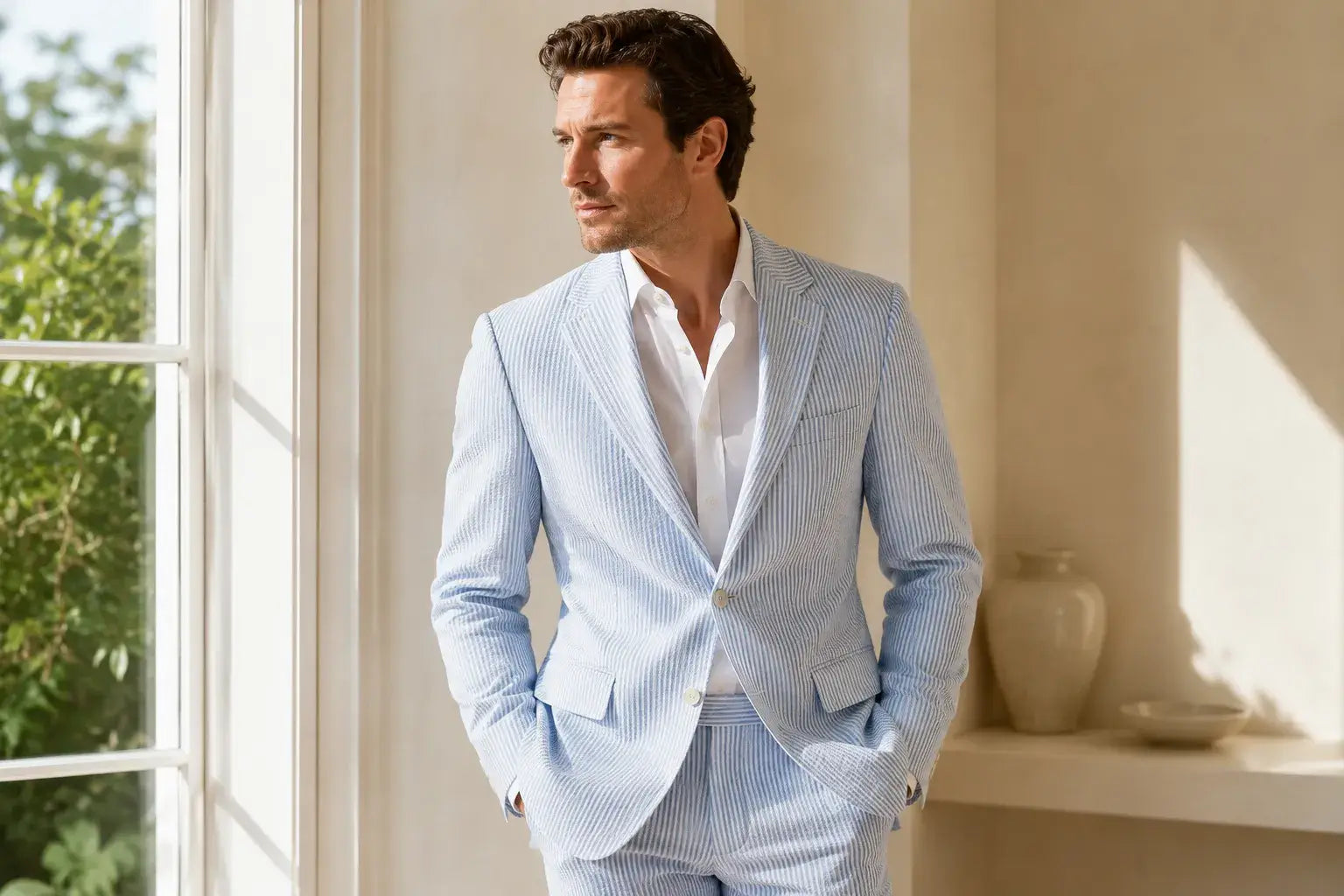
Seersucker suits are one of the best-known menswear uses of the fabric.
Here, the fabric matters because it needs to do two things at once: feel light in warm weather and still hold enough structure for a jacket and trousers.
That is why suit-quality seersucker should not be too thin or flimsy. It should have visible puckering, but enough body to keep the jacket clean.
If the fabric is too soft, the suit can look loose and tired. If it is too stiff, it loses the relaxed comfort that makes seersucker useful.
For fit, dress code, and styling details, read our full guide to what a seersucker suit is.
For finished summer tailoring, explore seersucker suits for men.
If you want to see how seersucker fabric translates into finished menswear, this guide gives a helpful overview of seersucker suits, blazers, buying details, and styling context.
Seersucker Blazers
A seersucker blazer is often easier to wear than a full suit.
From a fabric perspective, the blazer needs enough body to hold the shoulder, lapel, and front line without feeling heavy.
It pairs well with chinos, linen trousers, tailored cotton pants, and lightweight wool trousers.
For a first seersucker garment, a blazer is often the safest entry point. It gives you the texture without requiring a full matching outfit.
Seersucker Shirts
A seersucker shirt is one of the easiest ways to wear the fabric.
It works for summer travel, casual offices, resort wear, and weekend outfits.
For shirts, the fabric can be lighter than suit-quality seersucker. A little softness is fine because the shirt does not need to hold the same structure as a jacket.
Short sleeve seersucker shirts feel more casual. Long sleeve seersucker shirts can look more polished with chinos or tailored trousers.
Seersucker Pants And Shorts
Seersucker pants and shorts are more casual than suits or blazers.
They work best when the fit is clean.
Seersucker pants should not be too wide or too long. The fabric already has texture, so extra volume can look messy.
Seersucker shorts belong in vacation, beach, and weekend settings. They should not be treated as formal clothing.
For pants and shorts, check whether the fabric has enough opacity and body. Very thin seersucker can feel cool, but it may not hold shape well.
Dresses, Skirts And Resort Clothing
Seersucker is also used in dresses, skirts, children's clothing, sleepwear, and resort pieces.
For these garments, the fabric's texture gives shape without heavy structure. Embroidered seersucker fabric and gingham seersucker fabric are especially common in more casual or decorative summer clothing.
Buying Seersucker Fabric By The Yard

Some people search for seersucker fabric by the yard because they want to sew shirts, dresses, shorts, or lightweight summer pieces.
If you are buying fabric by the yard, check four things first:
- texture
- fiber content
- fabric weight
- whether the pattern is woven, yarn-dyed, or printed
The intended garment matters.
For a shirt, very light seersucker can work. For pants, the fabric needs a little more body. For a blazer or suit, it needs enough structure to hold shape without collapsing.
Do not choose fabric by color alone.
A beautiful white seersucker fabric or gingham seersucker fabric can still be wrong if it is too thin for the garment you want to make.
Common Seersucker Fabric Mistakes
The first mistake is thinking stripes alone make seersucker.
They do not.
The second mistake is ironing the fabric flat. The puckered texture is part of the design, so heavy pressing can reduce what makes the fabric useful.
The third mistake is choosing fabric that is too thin. Very light seersucker can work for shirts, but tailored clothing needs enough body to hold shape.
The fourth mistake is choosing too much pattern. Gingham seersucker fabric, plaid seersucker fabric, and embroidered seersucker fabric can look good, but they are usually better for casual pieces than formal tailoring.
The best seersucker fabric should look intentional, not crushed.
It should feel light, but not flimsy. It should have texture, but not look damaged. It should suit the garment you want to wear or make.
Seersucker Fabric Buying Checklist
Before buying seersucker fabric or clothing made from it, check the texture first.
✓ I can feel real puckered texture, not just printed stripes
✓ The fabric feels light but not flimsy
✓ The cotton content or blend is clearly listed
✓ The puckering looks even across the fabric
✓ The color fits the garment I want to wear or buy
✓ The fabric weight matches the use: shirt, pants, blazer, or suit
✓ I am not planning to iron the texture completely flat
✓ The pattern is not too loud for the final garment
If most of these checks are yes, the fabric is likely a useful summer choice rather than just a novelty stripe.
Seersucker fabric is most useful when texture, weight, and cut work together.
If you want the fabric in a finished summer suit, explore Wehilion's seersucker suits for men for lightweight warm-weather tailoring.