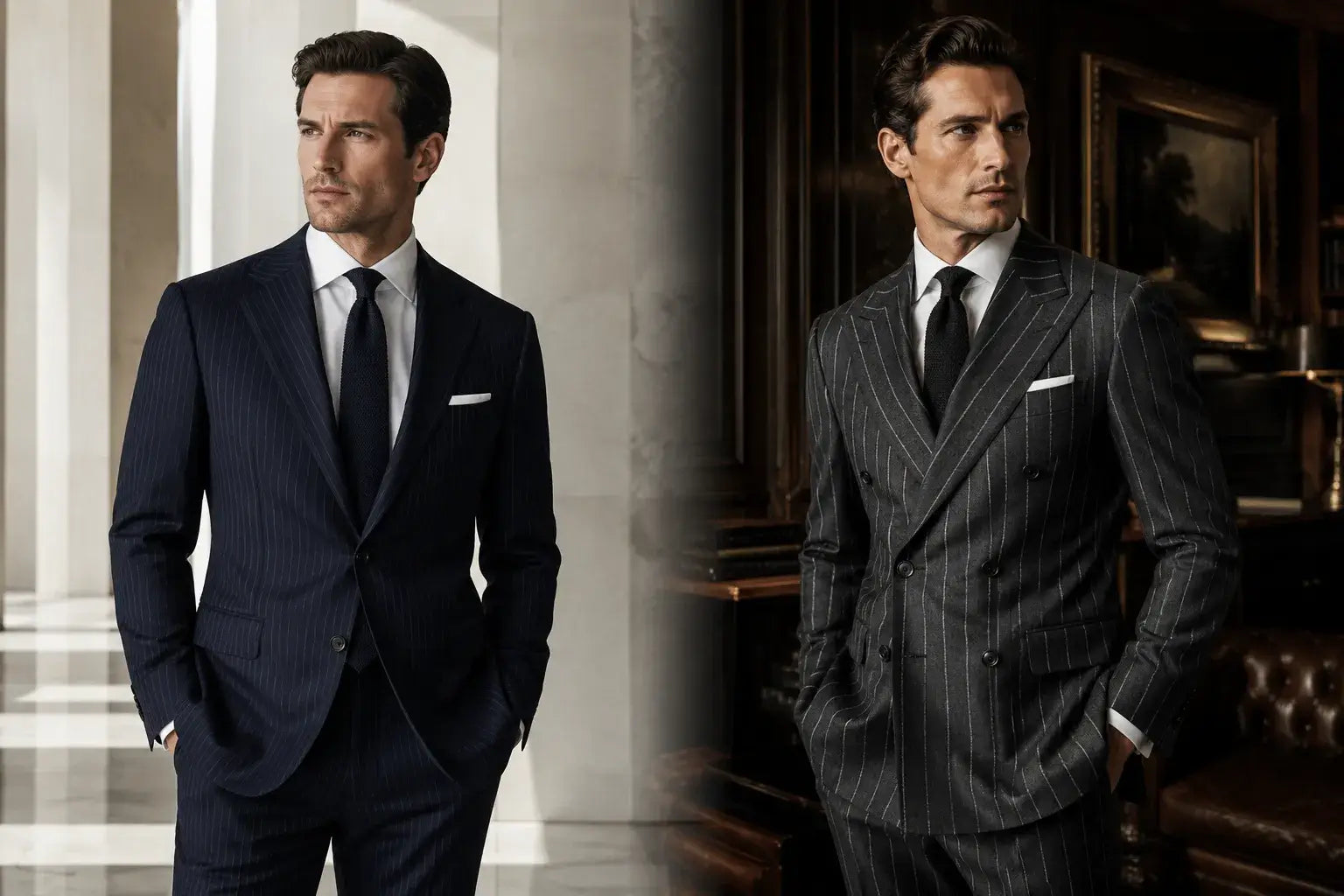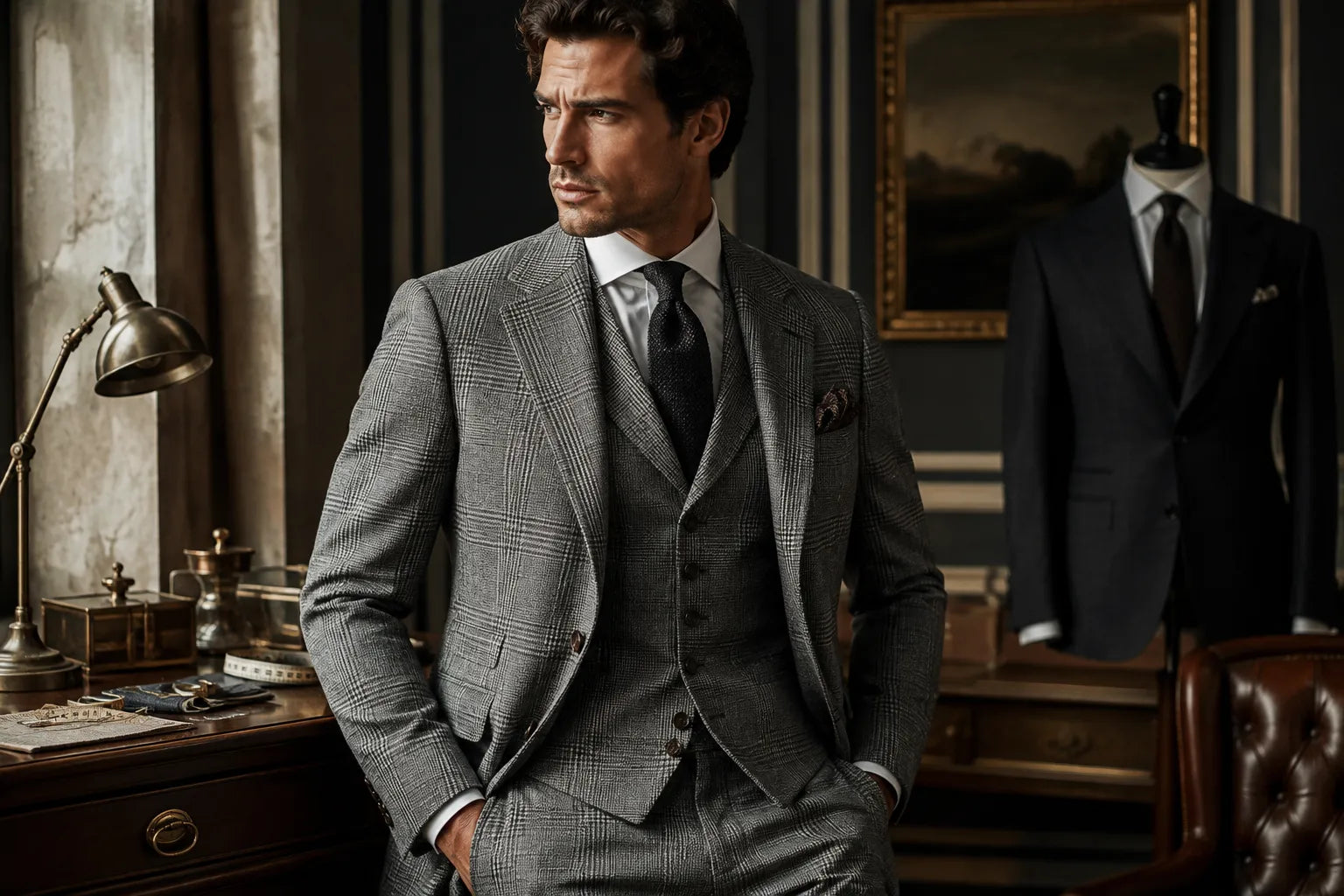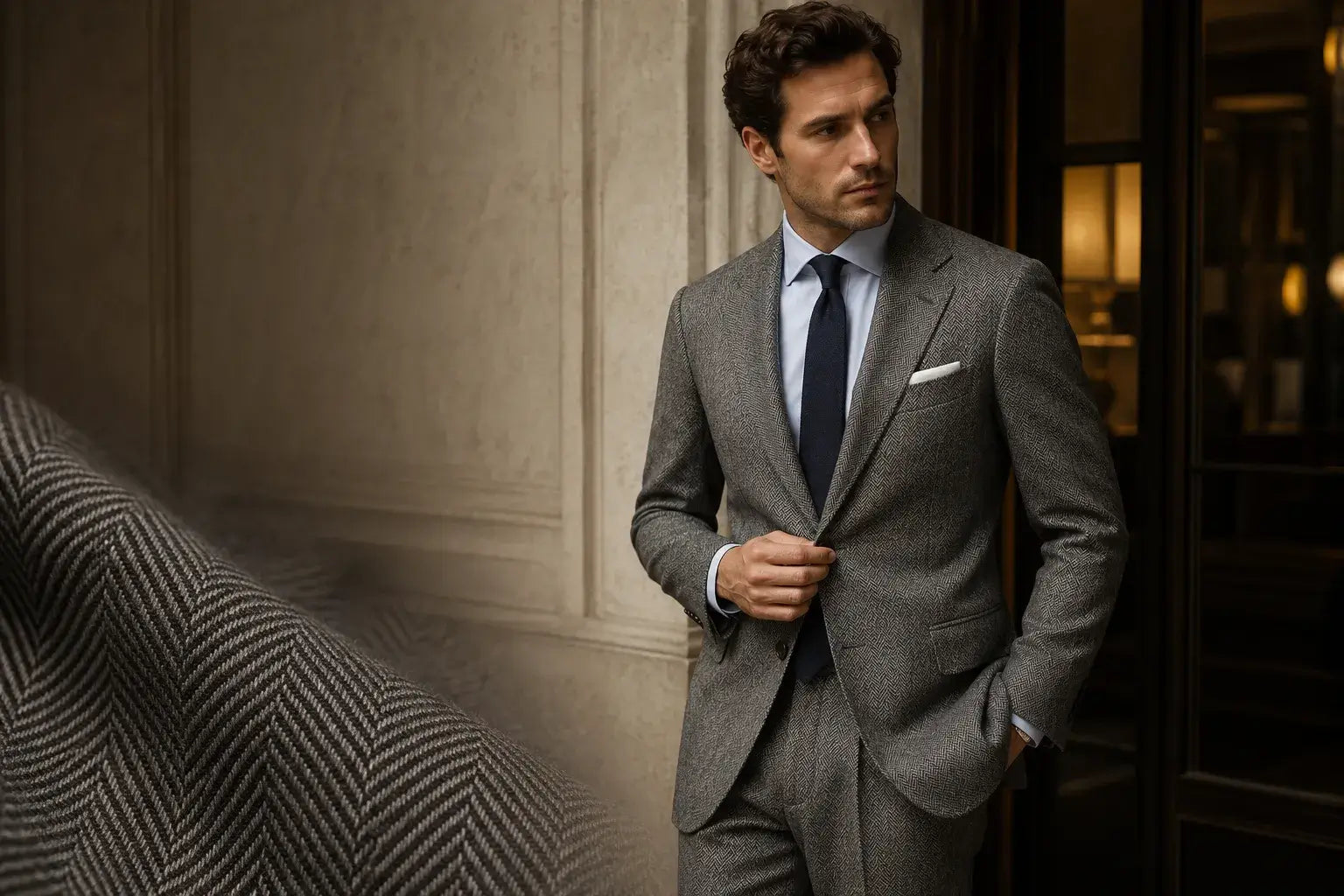


Few patterns in menswear have achieved the lasting influence of the Prince of Wales check. Known for its layered weave, subtle overcheck, and association with British tailoring, it remains one of the most recognizable expressions of classic suiting.
A Prince of Wales suit is defined by its fabric pattern rather than its construction. Unlike terms such as double-breasted, three-piece, or slim fit, which describe the silhouette of a garment, "Prince of Wales" refers specifically to the woven check design used in the cloth.
This distinction makes the pattern highly versatile. The same Prince of Wales check fabric can appear in a traditional grey business suit, a modern double-breasted style, or a lighter seasonal design.
More than simply a checked suit, Prince of Wales represents a balance between heritage and modern menswear: distinctive enough to add personality, yet refined enough for business, weddings, and formal occasions.
In this guide, we explore the history behind Prince of Wales check, how it differs from Glen plaid, how to choose the right fabric and fit, and how to style this classic pattern today.
What Is A Prince of Wales Suit?

A Prince of Wales suit is a tailored suit made from fabric featuring the Prince of Wales check pattern.
The name describes the cloth, not the cut. This distinction is important because Prince of Wales refers to the fabric pattern itself, while details such as lapel style, jacket construction, and fit determine the overall character of the suit. A Prince of Wales suit can be:
- Single-breasted
- Double-breasted
- Two-piece
- Three-piece
- Slim fit or classic fit
What makes it a Prince of Wales suit is the woven check pattern itself.
Traditional Prince of Wales check is created by weaving different colored yarns together rather than printing a design onto the surface. This process creates depth and allows the pattern to appear more natural and sophisticated.
The structure usually includes:
- A base check pattern
- Smaller woven checks layered throughout the fabric
- A contrasting overcheck crossing the surface
The overcheck is one of the defining details of the pattern. A subtle overcheck creates a more formal and versatile appearance, while a stronger contrast gives the suit a more expressive character.
This balance is why a Prince of Wales check suit works so well in tailored clothing. It provides visual interest without becoming as casual as many larger plaid designs.
The History Behind Prince of Wales Check

The origins of Prince of Wales check are closely connected with Scottish textile traditions, particularly the Glen Urquhart area of Inverness-shire.
Originally developed as a woven wool fabric for estate clothing, the pattern combined practicality with visual character. The durable cloth provided warmth and protection, while the distinctive check design created a recognizable appearance.
Over time, these woven fabrics moved from countryside clothing into formal tailoring. Their structured appearance and balanced pattern made them suitable for jackets and eventually complete suits.
The pattern's connection with British tailoring reflects a wider tradition of craftsmanship and structured menswear. Organizations such as the Savile Row Bespoke Association help preserve and promote the standards of British bespoke tailoring.
The pattern later became associated with British aristocratic style and gained international recognition through its connection with the Prince of Wales title. Edward VIII, known for his influential approach to menswear, helped popularize checked tailoring and contributed to the pattern's lasting reputation.
The lasting appeal of the Prince of Wales pattern comes from its versatility:
- Traditional enough for classic tailoring
- Distinctive enough to stand apart from solid suits
- Flexible enough for modern wardrobes
For readers interested in Scottish textile heritage and traditional woven patterns, the Scottish Register of Tartans provides historical resources on Scottish pattern traditions.
Watch: The History and Style of Prince of Wales Check
The Prince of Wales check has a long connection with British tailoring and classic menswear. This video provides a visual introduction to the pattern’s heritage and how it has remained relevant in modern style.
Prince of Wales Check vs Glen Plaid: What Is The Difference?

The terms Prince of Wales check and Glen plaid are often used interchangeably, but they are not always identical.
Glen plaid refers to a broader family of woven check patterns originating from Glen Urquhart check. Prince of Wales check is usually recognized by its additional overcheck layered across the underlying pattern.
A Glen plaid suit often creates a slightly more relaxed heritage appearance, while a Prince of Wales suit generally feels more connected to structured formal tailoring.
For more classic checked styles, explore our guide to plaid suits for men and discover additional options in our collection of plaid suits.
Understanding Prince of Wales Suit Fabric

The pattern creates the visual identity of the suit, but the fabric determines its comfort, structure, and overall character.
Traditional Prince of Wales suits are commonly made from wool because wool provides the qualities needed for tailored clothing:
- Natural breathability
- Shape retention
- Comfortable drape
- Durability
Wool
Wool remains the traditional choice for a Prince of Wales check suit because its natural structure complements the layered character of the pattern.
Fine wool creates a cleaner surface and sharper silhouette, while heavier wool provides more texture and a stronger traditional feel.
The The Woolmark Company provides further information about wool fiber characteristics and textile performance.
Tweed
Tweed creates a more heritage-focused interpretation of the pattern.
Its textured surface enhances the depth of Prince of Wales check and works especially well with:
- Wool ties
- Brown leather shoes
- Autumn color palettes
For men interested in traditional textured tailoring, tweed remains a classic choice for heritage-inspired menswear.
How To Choose The Right Prince of Wales Suit

Choosing the right Prince of Wales suit depends on several factors:
- Fit
- Color
- Pattern scale
- Fabric weight
- Occasion
Because the pattern itself already creates visual interest, the goal is to create balance between the fabric and the overall silhouette.
A well-chosen Prince of Wales suit should complement the wearer rather than overpower the rest of the outfit. The right combination of structure, color, and pattern scale can determine whether the suit feels traditional, modern, formal, or relaxed.
Choose The Right Fit
The construction of a Prince of Wales suit changes how the pattern is perceived. A structured silhouette emphasizes the heritage character of the fabric, while a cleaner modern cut creates a more contemporary appearance.
Slim Fit
A slim fit creates a sharper and more contemporary appearance.
Slim fit works particularly well for modern formal occasions and evening events, especially for men who prefer a cleaner silhouette.
However, because Prince of Wales check already contains visual detail, an overly tight fit can make the pattern appear crowded.
A balanced slim fit should maintain a defined shape while still allowing comfortable movement.
Classic Fit
A classic fit follows traditional tailoring principles with:
- More room through the chest
- Natural movement
- Balanced proportions
This style works particularly well for business settings and men who prefer a traditional approach to menswear.
A classic fit Prince of Wales suit often creates a more timeless and sophisticated appearance.
Double-Breasted Prince of Wales Suit
A double-breasted Prince of Wales suit creates a stronger tailoring presence.
The structured front and wider overlap emphasize the heritage character of the pattern while creating a more confident silhouette.
A modern example is the light blue double-breasted Prince of Wales check suit, which combines traditional pattern heritage with contemporary tailoring.
Choose The Right Color
The background color of a Prince of Wales suit significantly changes its overall impression.
Grey Prince of Wales Suit
Grey is the most versatile choice.
The neutral background allows the overcheck to remain visible while keeping the overall appearance professional.
It works naturally with:
- White shirts
- Navy ties
- Brown leather shoes
For men buying their first patterned suit, grey is usually the easiest option because it balances personality and practicality.
Light Beige Prince of Wales Check Suit
A light beige Prince of Wales check suit creates a softer interpretation of this classic pattern.
The lighter background reduces contrast, making the suit suitable for:
- Spring weddings
- Outdoor events
- Daytime formal occasions
Compared with darker versions, beige creates a more relaxed appearance while maintaining the structure and sophistication of traditional tailoring.
Explore the light beige Prince of Wales check suit for a modern interpretation of this classic pattern.
Understanding Pattern Scale
Pattern scale is one of the most important details when choosing a checked suit.
The size of the check influences how formal or expressive the suit appears.
For a first Prince of Wales suit, a medium-scale pattern is usually the easiest choice.
It provides enough personality to stand out while remaining simple to style with different shirts, ties, and shoes.
Best Seasons For A Prince of Wales Suit
Although Prince of Wales check is traditionally associated with autumn and winter tailoring, the right fabric and color allow it to work throughout the year.
The flexibility of the pattern is one reason it remains relevant in modern menswear. A lightweight wool Prince of Wales suit can feel refined in warmer months, while textured wool and tweed versions create a stronger seasonal appearance.
Who Should Wear A Prince of Wales Suit?
A Prince of Wales suit works especially well for men who want more character than a solid suit without choosing a bold fashion pattern.
The strength of this pattern is its balance. It adds texture and personality while remaining appropriate for many traditional occasions.
Men Building A Classic Wardrobe
For men moving beyond navy, charcoal, and black suits, Prince of Wales check introduces texture while remaining versatile.
Unlike stronger checks or statement patterns, the design feels refined because the pattern is woven into the fabric rather than printed on the surface.
It works well as:
- A first patterned suit
- A business alternative to solid colors
- A versatile formal option
A well-selected Prince of Wales suit can become one of the most flexible pieces in a modern tailored wardrobe.
Wedding Guests
A Prince of Wales check suit is an excellent choice for weddings because it offers more personality than a plain suit while maintaining an elegant appearance.
Grey versions create a traditional formal look, while beige and lighter colors are particularly suitable for:
- Spring weddings
- Outdoor celebrations
- Daytime events
The pattern works especially well for guests who want to appear polished without choosing a traditional black or navy suit.
Professionals Seeking Alternatives To Plain Suits
For workplaces with flexible dress codes, Prince of Wales check provides a refined alternative to traditional navy or charcoal suits.
Compared with stronger patterns, it creates a softer and more approachable impression while maintaining a professional appearance.
It works particularly well for:
- Client meetings
- Creative industries
- Business-casual environments
When A Prince of Wales Suit May Not Be The Best Choice
A professional style guide should also consider when a certain style may not be appropriate.
A plain navy or charcoal suit may be better for:
- Extremely conservative workplaces
- Strict formal dress codes
- Minimalist wardrobes that avoid visible patterns
The best suit choice depends on both the occasion and personal style.
Understanding when not to wear a patterned suit is just as important as knowing how to style one.
How To Wear A Prince of Wales Suit

Because the pattern already creates visual interest, the rest of the outfit should remain balanced.
The goal is to complement the fabric rather than compete with it.
Shirts
Reliable choices include:
- White dress shirts
- Light blue shirts
- Textured Oxford shirts
A white shirt provides the most formal and versatile option, allowing the Prince of Wales pattern to remain the visual focus.
A light blue shirt creates softer contrast and works particularly well with grey and blue Prince of Wales suits.
Textured Oxford shirts can add depth while maintaining a refined appearance.
Ties
Recommended options:
- Solid silk ties
- Knitted ties
- Wool ties
Simple textures usually work better than competing patterns.
Good tie colors include:
- Navy
- Burgundy
- Dark green
- Brown
Since Prince of Wales check already contains multiple visual elements, a restrained tie choice creates a more balanced overall outfit.
Shoes
Traditional choices include:
- Brown Oxford shoes
- Brogues
- Loafers
Brown leather works especially well with grey, beige, and brown Prince of Wales fabrics because it complements the warm tones commonly found in classic tailoring.
Black shoes can also work with darker grey versions when a more formal appearance is required.
Watch: How To Style a Prince of Wales Suit
Seeing the pattern in real outfits can help understand how different colors, accessories, and tailoring choices affect the overall look. This styling guide offers practical inspiration for wearing a Prince of Wales suit today.
Prince of Wales Suit vs Other Classic Patterns
Prince of Wales check is one of the most recognizable patterns in menswear, but it is not the only traditional option.
Understanding how it compares with other classic suit patterns can help you choose the right style for your wardrobe.
Prince of Wales Check vs Herringbone
Both patterns rely on woven construction rather than printed decoration, but they create different visual effects.
Prince of Wales check is defined by its layered check structure and overcheck, while herringbone creates interest through the direction of the weave itself.
Herringbone often appears more subtle from a distance, making it suitable for men who prefer texture without an obvious pattern.
For men interested in another classic woven tailoring style, explore our guide to herringbone suits.
Prince of Wales Check vs Pinstripe
Pinstripe suits have traditionally been associated with professional and corporate dressing.
Their vertical lines create a sharper and more structured appearance.
Prince of Wales check offers a softer alternative:
- Pinstripe → sharp and business-focused
- Prince of Wales → refined and versatile
Modern Interpretations Of Prince of Wales Check
The Prince of Wales pattern continues to evolve through modern colors and silhouettes.
Traditional grey versions remain popular, but contemporary interpretations introduce lighter colors and stronger tailoring approaches.
Light Beige Prince of Wales Check 2-Piece Suit

A light beige Prince of Wales check suit provides a softer interpretation of traditional checked tailoring.
The lighter background reduces contrast and creates a more relaxed appearance while maintaining the structure of classic menswear.
It is particularly suitable for:
- Spring weddings
- Outdoor events
- Warmer seasons
This style demonstrates how Prince of Wales check can move beyond traditional grey business suits.
A modern example is the light beige Prince of Wales check suit, which shows how this traditional pattern can be adapted for weddings, outdoor events, and warmer seasons.
Light Blue Double-Breasted Prince of Wales Check 2-Piece Suit

A double-breasted Prince of Wales suit creates a stronger tailoring statement.
The combination of:
- Heritage pattern
- Contemporary color
- Structured tailoring
creates a modern interpretation of traditional menswear.
The double-breasted silhouette gives the classic check a stronger and more distinctive appearance.
The light blue double-breasted Prince of Wales check suit demonstrates how a classic pattern can take on a more contemporary character through color and structure.
Explore More Checked Suit Styles
Prince of Wales check belongs to a wider family of classic checked tailoring.
For men interested in exploring more traditional checked suit designs, explore our collection of plaid suits.
Quick Care Tips For A Prince of Wales Suit
To maintain the fabric and structure:
- Use a quality hanger with broad shoulders
- Brush away surface dust after wearing
- Allow the suit to rest between wears
- Store in a breathable garment bag
Proper care helps preserve:
- The drape of the fabric
- Shoulder structure
- Definition of the woven pattern