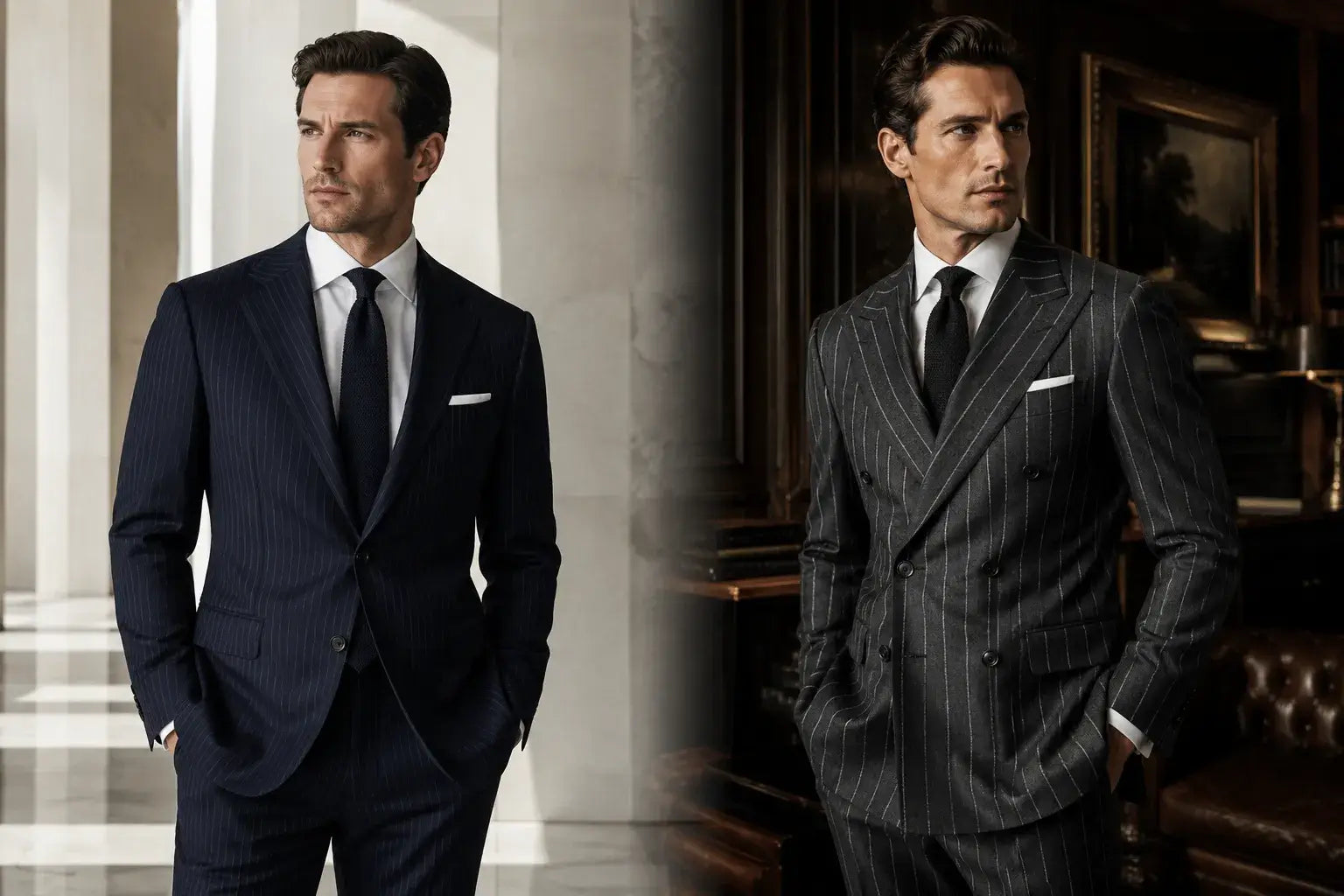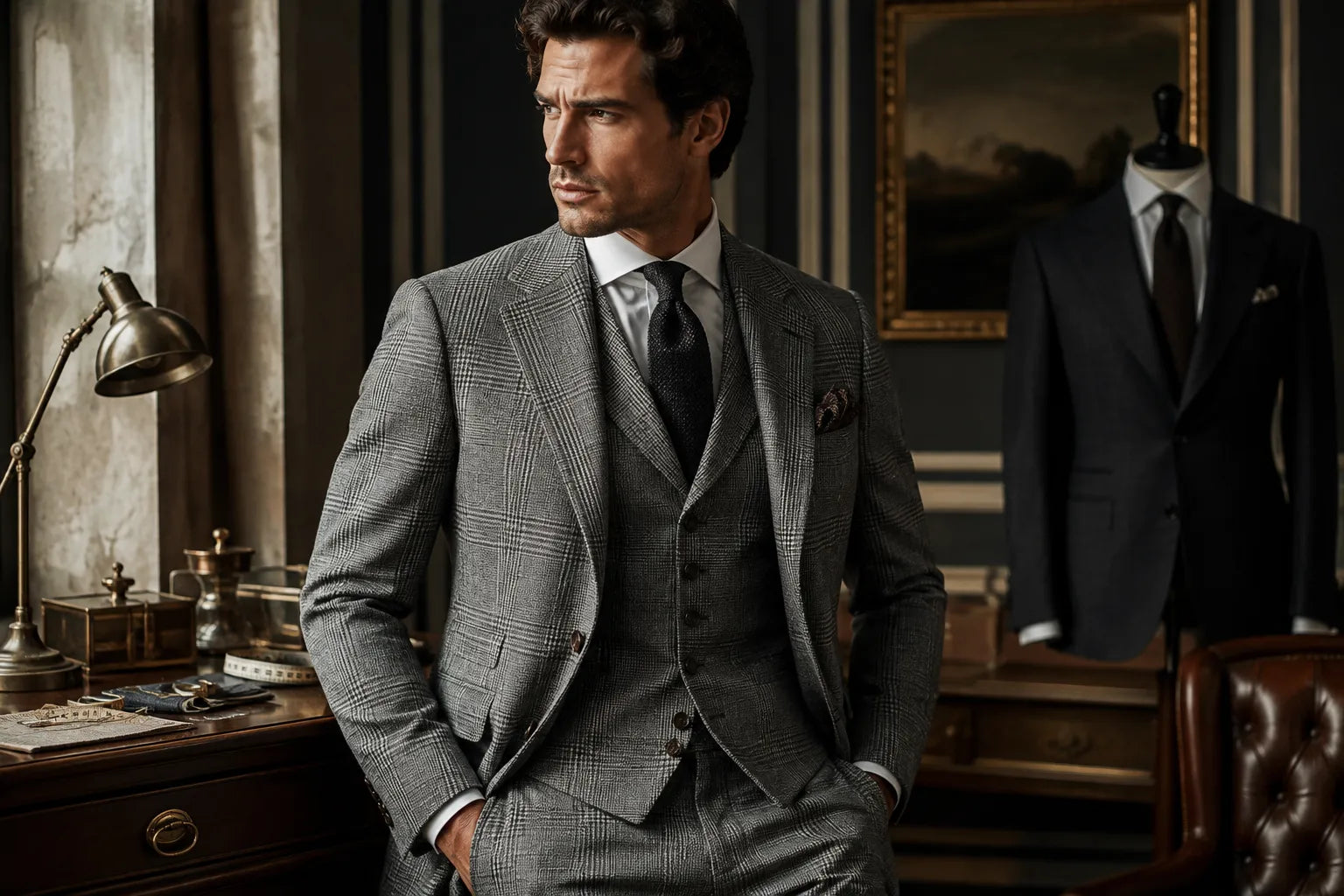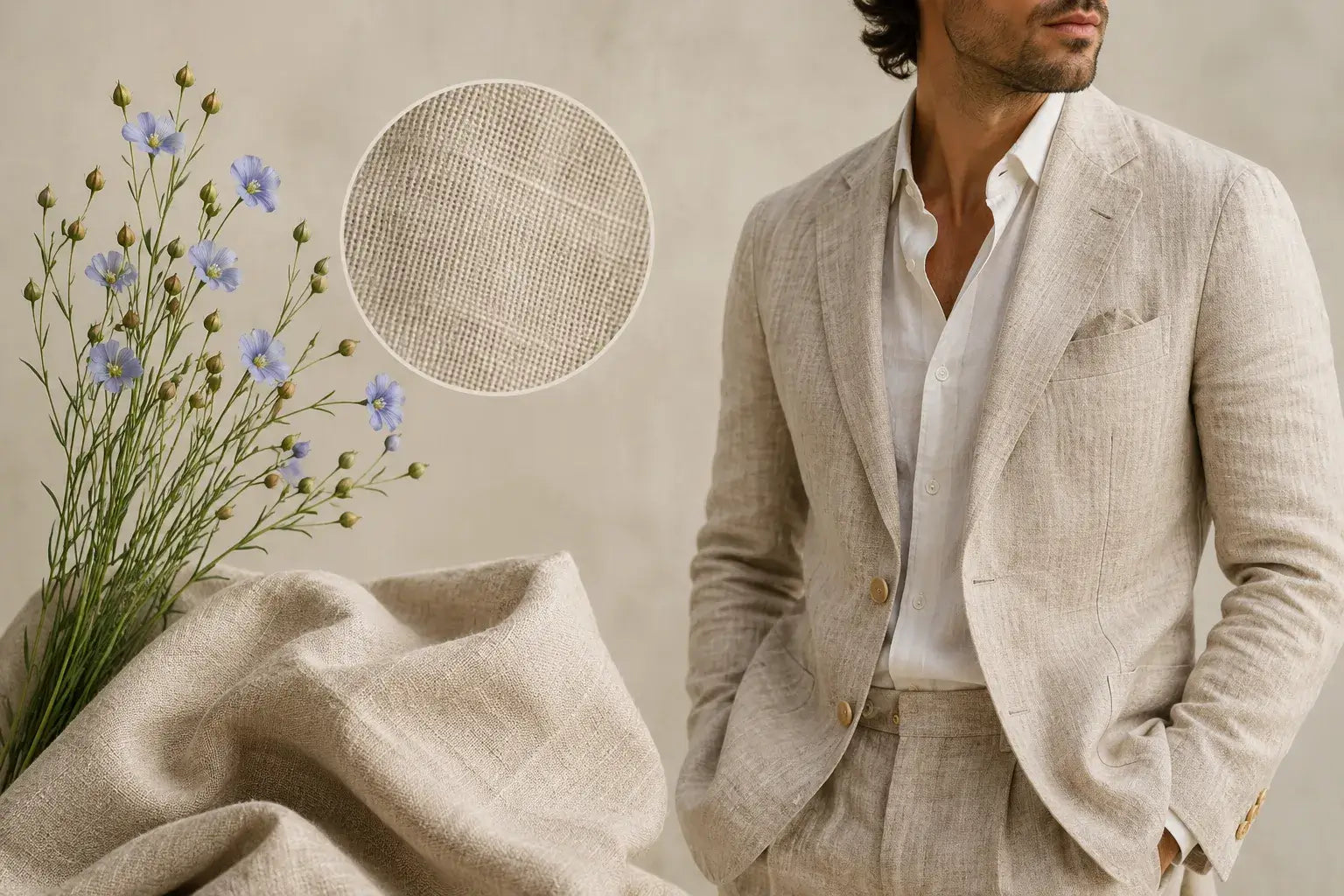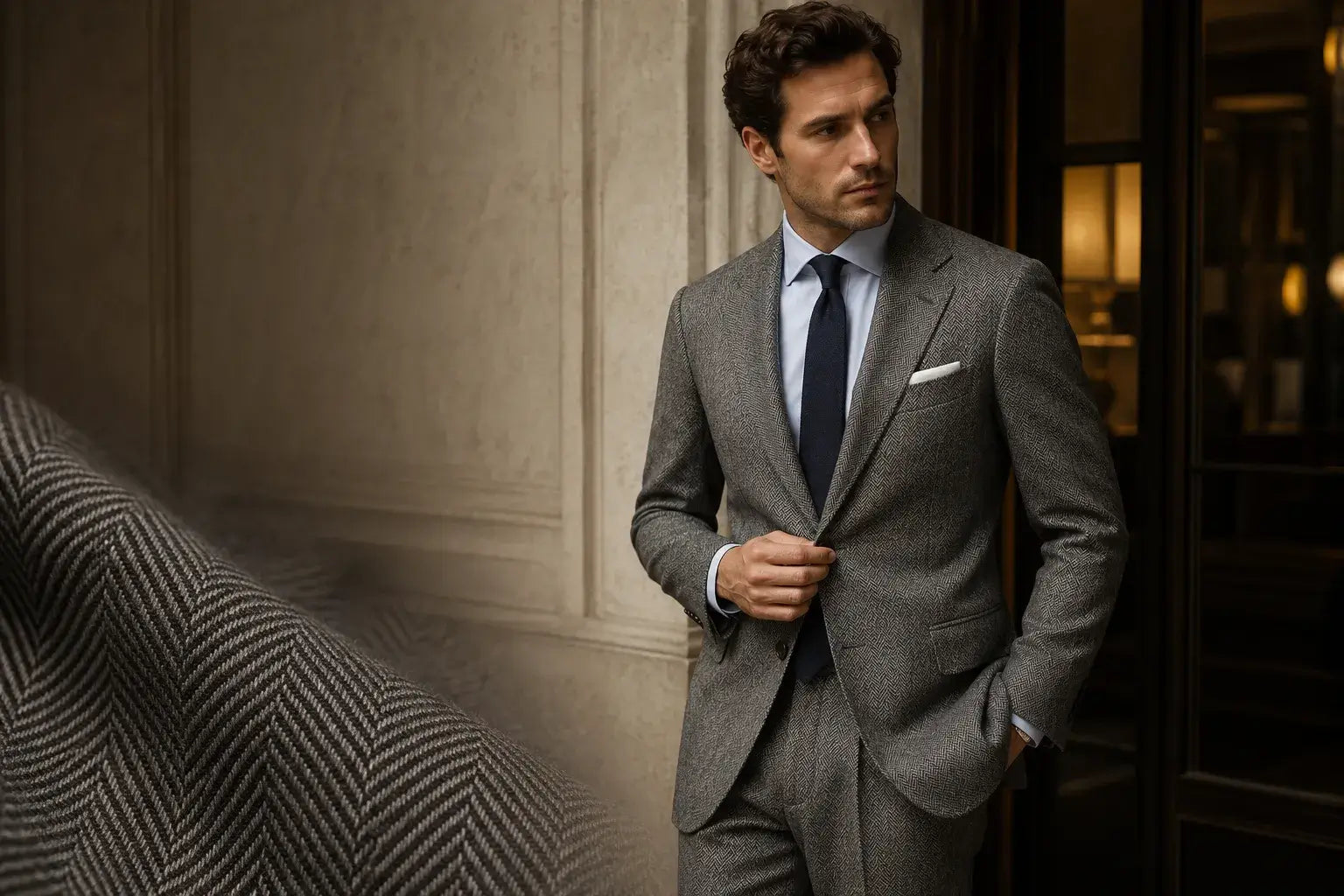
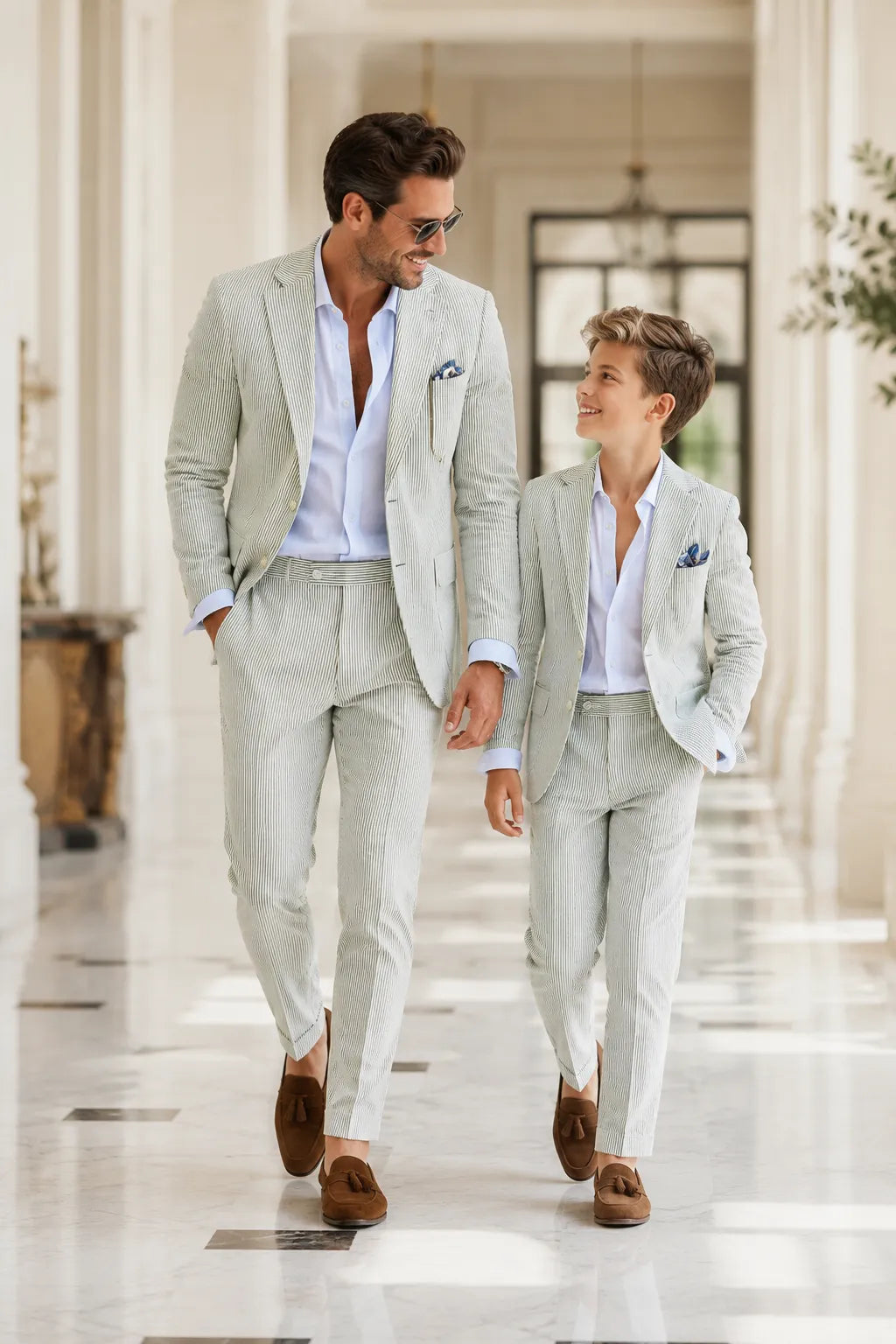

The difficulty with striped suits is not choosing between "classic" and "bold." It is knowing when the stripe adds character—and when it starts wearing you.
For a first striped suit, the safest formula is usually simple: navy or medium grey, a fine low-contrast stripe, and a single-breasted two-piece cut. It gives you enough pattern to feel more distinctive than a solid suit without making the outfit difficult to reuse for work, weddings or dinners.
Wider chalk stripes, stronger contrast, double-breasted jackets and three-piece tailoring make more sense when you deliberately want the pattern to carry more visual weight. Comparing different striped suits for men side by side is useful because two suits sold under the same broad pattern name can look completely different once stripe scale, color, cloth and construction change.
This guide explains how to tell those differences apart—and how to choose a striped suit with enough character to stand out without becoming harder to wear once the novelty has passed.
What Makes One Striped Suit Easier to Wear Than Another?
A fine navy stripe and a bright white stripe on black cloth may both fall under the broad label of a striped suit, but they behave very differently once worn.
A pinstripe suit is one type of striped suit, while chalk stripes, high-contrast stripes and striped summer fabrics all sit within the wider category. In practice, two things matter most: stripe scale and contrast.
A fine muted stripe on navy can almost disappear from across the room. Put a bright white stripe on the same dark base and the suit immediately becomes more assertive. That difference matters more than the label on the product page.
A narrower stripe usually gives you greater flexibility because it reads as texture before it reads as pattern. Wider spacing and stronger contrast push the suit in the opposite direction.
If you are comparing striped suits online, zoom out as well as in. A pattern that looks subtle in a close-up fabric photograph may be much more prominent when seen across the full jacket and trousers.
Vertical lines can reinforce a longer visual line, but do not expect the pattern to correct poor proportions. Jacket length, shoulder fit, trouser rise and overall balance matter more.
Pinstripe, Chalk Stripe and Bolder Stripe Styles

Pinstripe Suit
Pinstripes use fine, relatively crisp vertical lines spaced evenly across the cloth.
Their association with professional tailoring has deep roots. The Los Angeles County Museum of Art menswear collection includes a grey pinstriped three-piece lounge suit made in London in 1911, showing how established the pattern already was in early 20th-century business dress.
That history still affects how pinstripes are read, but a modern men's pinstripe suit does not need to look corporate. A fine navy or grey pinstripe can work for business, weddings and formal social occasions because the line remains visible without taking over the outfit.
When buying one, look beyond the color name. Pay attention to:
- how bright the stripe appears against the base cloth
- whether the jacket front stays clean when buttoned
- whether visible pocket stripes are reasonably aligned
- whether the fabric looks matte and tailored rather than excessively shiny
A subtle stripe on a well-draping fabric is usually easier to repeat-wear than a brighter line on glossy cloth.
Chalk Stripe Suit
A chalk stripe is broader and softer-edged than a pinstripe. The line often appears slightly diffused rather than sharply drawn, which is why chalk stripes sit naturally on woollen and flannel cloths with visible surface texture.
They also tend to work best with tailoring that has enough structure to support the pattern.
Wehilion's Men's Double Breasted Stripe 3 Piece Suit is a useful example. The pronounced stripe is paired with peak lapels, a double-breasted front and a waistcoat, so the whole suit leans toward heritage-inspired formal tailoring rather than quiet office wear.
A chalk stripe often makes more sense once you already know that you enjoy structured or expressive tailoring. If versatility is the priority for your first striped suit, a fine pinstripe will usually be easier to live with.
Bold and High-Contrast Stripes
A black and white striped suit, or a black suit with bright white stripes, sits at the opposite end of the spectrum. These designs can work for prom, fashion-focused events or situations where being noticed is intentional, but they are much harder to make feel neutral.
The stronger the contrast, the quieter the rest of the outfit generally needs to become.
This is also where product photography can mislead. Studio lighting may make a stripe look cleaner or more controlled than it appears in ordinary indoor light, so check multiple images if they are available, especially full-body, side and back views.
Not every directional-looking pattern is technically striped. Herringbone, for example, is formed from a broken V-shaped weave rather than continuous vertical lines. The herringbone suit guide explains that construction in more detail.
If you are deciding between stripes and checks, the plaid suit guide covers Glen plaid, windowpane and other checked patterns separately.
For a visual comparison, Gentleman's Gazette shows how different stripe scales read across classic menswear:
The useful takeaway is not to memorize every stripe name, but to notice how quickly scale and contrast change the character of the cloth.
Pinstripe vs Chalk Stripe: Which One Should You Buy?

The practical difference is straightforward:
The John F. Kennedy Presidential Library's navy chalk-striped suit is a useful reference because the museum describes chalk stripes as broader and more diffused than finer pinstripes.
If this is your first striped suit and versatility matters, a fine pinstripe is usually the safer choice. If you already own solid navy and grey suits and want something more distinctive, a chalk stripe becomes much more interesting.
For a business-heavy wardrobe, navy or charcoal pinstripe remains the easier direction. For a wardrobe built around double-breasted tailoring, textured wool and three-piece suits, chalk stripes make more sense.
Neither pattern is automatically more formal. Color, cloth and construction still determine the overall effect.
How to Choose a Striped Suit You'll Actually Wear
The easiest mistake is buying the most dramatic striped suit on the page instead of the one that fits your actual life.
Start With Where You'll Wear It
If most of your suit use is professional, start with navy or charcoal and keep the stripe fine.
If the same suit needs to cover work and weddings, navy or medium grey is usually the better compromise. For social occasions and daytime weddings, blue and lighter grey give you more freedom.
For heritage-focused tailoring, a chalk stripe, double-breasted jacket or waistcoat can add the character you want. For summer events, fabric should move higher up the priority list than traditional business associations.
A useful rule is:
If one suit needs to do several jobs, reduce the contrast before increasing the drama.
Choose Color After Occasion

Navy and Blue
Navy is the easiest first striped-suit color for most men. It works with white and pale blue shirts, pairs comfortably with black or brown shoes, and moves between business and wedding settings without looking misplaced.
A Men's Classic Navy Stripe 2 Piece Suit shows why the formula works: fine stripes, a simple single-breasted jacket and a two-piece construction keep the pattern controlled.
Royal blue and lighter blue pinstripe suits attract more attention. They can work well for weddings, prom and daytime social events, but they are less discreet in conservative workplaces.
Grey and Charcoal
Medium grey is the most flexible grey. Light grey feels softer and more seasonal, while charcoal feels darker, more serious and more business-oriented.
Do not shop by color label alone. A charcoal suit with a muted stripe can look quieter than a light grey suit with a bright white one.
Black
Black requires more judgment. A tonal black pinstripe can look clean and understated, while a bright black-and-white pinstripe can become dramatically more theatrical.
Black is therefore not automatically more formal. A highly visible stripe can make it less conservative than navy or charcoal.
If this is your first striped suit, strong black-and-white contrast is usually worth avoiding unless statement dressing already fits your wardrobe.
Brown and Other Statement Colors
Brown works well with textured wool, softer tailoring and autumn wardrobes. Burgundy, green, cream, white and purple depend more heavily on personal style and occasion.
Before buying one, ask whether you already own the shirts, shoes and outerwear needed to build more than one outfit around it. A suit that only works with one combination is rarely the best first purchase.
Decide How Much Stripe You Can Live With
A stripe can look exciting precisely because it is unfamiliar. That does not mean you will still want to wear it six months later.
If you are trying the suit on in person, step six to eight feet away from the mirror. At normal conversational distance, the stripe may look much stronger than it did up close.
Then take a phone photo under ordinary indoor lighting. High-contrast stripes often photograph more aggressively than they appear in a fitting-room mirror.
If you are shopping online:
- compare the full-body image with the fabric close-up
- check side and back views if available
- look at how the stripe behaves across pockets and seams
- compare the model's height and jacket size with your own proportions
- check whether the stripe becomes noticeably stronger under different lighting
- do not judge the pattern from the front hero image alone
If you are still uncertain, reduce one variable. Choose a finer stripe, lower the contrast, keep the jacket single-breasted or skip the waistcoat.
You rarely need a wide stripe, bright contrast, double-breasted front, peak lapels and three-piece construction all at once.
Single-Breasted or Double-Breasted?

A single-breasted striped suit is easier to wear repeatedly. The front is visually cleaner, which gives the pattern more room without adding another strong design element.
It is usually the better choice for a first pinstripe suit, frequent business use or a wardrobe that needs flexibility.
Double-breasted tailoring is stronger before the stripe is even added. The overlapping front, extra buttons and stronger lapel line already create structure. Add a broad stripe and the overall effect becomes noticeably more assertive.
If that silhouette is what appeals to you, compare striped examples with other double breasted suits for men. That helps separate the effect of the pattern from the effect of the construction.
2 Piece or 3 Piece?
A two-piece is the practical choice for most men. It is easier to repeat-wear, easier to dress down and easier to use across several occasions.
A three-piece makes more sense for grooms, formal events and men who deliberately enjoy heritage tailoring. The waistcoat extends the stripe over more of the body, giving the outfit stronger visual continuity.
Do not buy a three-piece simply because it looks more premium. If the waistcoat will spend most of its time unworn, a better-fitting two-piece is the smarter purchase.
If you know you will use the extra layer, compare different 3 piece suits for men before deciding how much stripe you want on top of the added structure.
Fabric Matters More Than Most Buyers Expect
The same stripe behaves differently depending on the cloth.
Worsted wool gives pinstripes a cleaner appearance. Flannel softens the line and suits chalk stripes particularly well. Cotton and seersucker move stripes away from traditional corporate tailoring and toward seasonal dressing.
Holland & Sherry's Classic Woollen Flannel wide chalk stripe is a useful example of the relationship between broader chalk stripes and substantial woollen cloth.
But do not shop by fiber percentage alone. Weight, weave, finish, surface sheen and drape matter just as much. Two fabrics with similar compositions can behave very differently once made into a jacket.
The suit fabric guide goes deeper into how common suiting fabrics perform in practice.
Inspect Stripe Alignment Before Buying

Striped cloth makes construction easier to judge.
Look at:
- jacket fronts
- lapels
- flap or patch pockets
- the center back seam
- trouser side seams
Perfect pattern matching is not realistic at every shaped seam, but highly visible areas should look intentional.
Use the stripe to assess fit too. If the lines bend sharply around the jacket button, the front may be pulling. If trouser stripes curve heavily across the thighs, the trousers probably need more room.
The stripe should follow the suit. It should not reveal every point where the suit is under tension.
When Does a Striped Suit Work Best?
Business and Professional Settings
Fine pinstripes still make the most sense in professional settings.
For conservative workplaces, navy or charcoal with restrained contrast and a conventional single-breasted cut is the safest direction. Creative offices allow more room for blue, medium-width stripes, textured cloth and double-breasted tailoring.
Interviews require more caution. A subtle pinstripe can be appropriate in many industries, but if you know almost nothing about the company culture, a solid navy or charcoal suit remains the lower-risk option.
There is no benefit in making the suit the most memorable part of the interview.
Weddings
A striped suit can work very well for a wedding, but your role matters.
A groom can take more visual risk. Three-piece tailoring, chalk stripes or a stronger double-breasted silhouette can help distinguish him from guests.
Groomsmen should prioritize coordination with the wedding palette and the groom's direction, while guests should usually stay quieter. Navy, blue and grey with subtle stripes add character without making the outfit the focal point of the room.
If the wedding itself is driving the purchase, compare striped styles with broader wedding suits for men before committing to a pattern. Venue, season and your role may matter more than the stripe.
The wedding suit guide for men goes further into dress code, season and role-specific choices.
Formal and Evening Events
Dark navy, charcoal and restrained black stripes can work for dinners, cocktail events and many formal evening occasions.
But a striped lounge suit does not replace a tuxedo when the invitation explicitly says black tie.
The Emily Post Institute's black-tie guidance specifies a tuxedo for traditional black tie, while a dark suit becomes acceptable under black-tie-optional dress codes.
This is one of the occasions where a striped suit may simply be the wrong purchase for the event.
Summer and Outdoor Events
Summer is where striped tailoring can move furthest from its business reputation.
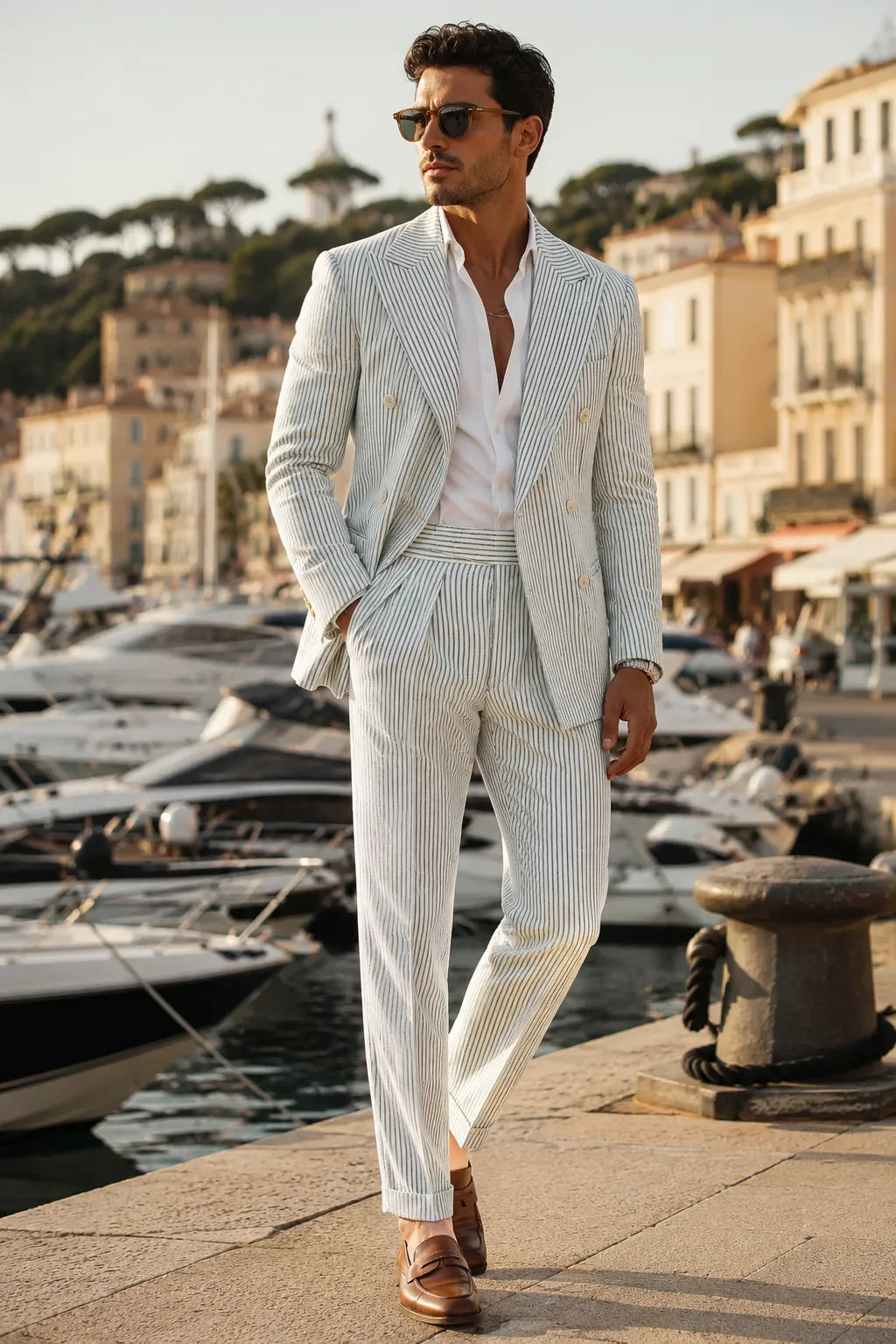
Blue-and-white seersucker, lightweight cotton and softer construction all work naturally for garden weddings, daytime receptions and coastal settings. In warm-weather tailoring, fabric often changes the character of the stripe more than the stripe itself.
The Metropolitan Museum of Art's Costume Institute documents seersucker's puckered construction and its long relationship with summer dress. The raised surface helps keep portions of the cloth away from the body, which contributes to the fabric's warm-weather character.
Wehilion's Men's Blue Striped Cotton Seersucker 2 Piece Suit illustrates the distinction clearly. Its visible blue stripe sits on puckered summer cloth rather than dark worsted wool, so the suit reads much more naturally for warm-weather weddings and daytime events.
Treat seersucker as seasonal tailoring, not as a substitute for a dark business pinstripe.
How to Style a Striped Suit Without Overdoing It

The safest way to style stripes is to give the suit one clear role in the outfit.
Three Combinations That Work
For business, try a navy fine pinstripe suit, white poplin shirt, burgundy grenadine tie and dark brown or black Oxfords. The burgundy tie adds color without introducing another competing pattern, while the white shirt keeps the overall effect clean.
For a more formal heritage look, pair a charcoal chalk-stripe suit with a pale blue shirt, solid dark tie and black Oxfords. The pale blue softens the heavier chalk stripe, while black shoes keep the outfit grounded rather than making the pattern feel decorative.
For summer, a blue striped seersucker suit with an open-collar white shirt and brown loafers works because the fabric itself lowers the formality. Adding a tie would often make the outfit feel more rigid than the cloth calls for.
The same principle applies to all three combinations: the suit carries the pattern; the rest of the outfit supports it.
That principle is easier to see in motion. Thoughtful Style demonstrates how changing the shirt, tie and overall formality can shift the character of the same striped tailoring:
Rather than copying each look exactly, pay attention to how the supporting pieces either sharpen or relax the suit.
Can You Wear a Striped Shirt With a Striped Suit?
Yes.
The problem is not having two stripes. It is having two stripes that look too similar.
A fine pinstripe suit can work with a broader shirt stripe because the eye can separate the scales. A suit and shirt with nearly identical stripe width and spacing usually look too busy.
Contrast matters too. If both patterns are strong, changing scale may still not be enough.
If you are unsure, wear a solid shirt.
What Tie Works Best?
Solid silk and grenadine ties are easy choices because they introduce texture without adding another strong line.
Small geometric patterns can work too. A striped repp tie is not automatically wrong, but the width, direction and contrast need enough separation from the suit.
Pattern mixing usually fails because several elements compete at the same scale—not because more than one pattern exists.
What Shoes Work With a Striped Suit?
Choose shoes according to the base color and dress code, not the stripe.
Oxfords suit formal settings. Derbies are slightly more flexible. Loafers work best when the overall outfit is intentionally relaxed.
Keep Accessories in Their Place
A pocket square, watch or tie bar should finish the outfit rather than become a second theme.
If you are already wearing a broad chalk stripe, patterned shirt, striped tie and patterned pocket square, the problem is not any one item. The outfit simply has no hierarchy.
Are Pinstripe Suits Still in Style?
Pinstripes never really disappeared. Their context simply broadened.
They still make sense in business because the pattern retains its association with structured professional tailoring, but it no longer belongs exclusively to that world.
A modern pinstripe can work at weddings, dinners and less formal events, often with softer shirts, knitwear, open collars or loafers instead of a rigid corporate uniform.
The useful question is not whether pinstripes are “back.” It is whether the styling looks intentional.
A good modern pinstripe borrows the authority of traditional tailoring without turning into a costume version of it.
Mistakes That Make a Striped Suit Look Cheap
Too Much Contrast
A very bright stripe can dominate the suit. That may be appropriate for a statement event, but it makes the garment harder to reuse for business or understated weddings.
If versatility matters, reduce contrast first.
Poor Stripe Alignment
Stripes make careless construction easy to spot.
Pay particular attention to pockets, jacket fronts and major seams. Small compromises around shaped sections are normal; obvious mismatches at prominent points are harder to ignore.
An Overly Tight Fit
Straight lines make tension visible.
If the stripe bends around the jacket button or curves heavily across the thighs, the garment may be too tight.
Slim and strained are not the same thing.
Too Many Competing Patterns
You do not need to ban patterned shirts or ties.
The problem begins when several patterns compete at the same scale and contrast. One dominant pattern with quieter supporting pieces is usually easier to control.
A Quick Buying Checklist
Before ordering or keeping a striped suit, ask:
- Is the stripe appropriate for the main place I expect to wear it?
- Is the contrast subtle enough for repeat wear?
- Does the pattern still look balanced from six to eight feet away?
- Does it photograph much louder under normal indoor light?
- Does the jacket close without distorting the vertical lines?
- Are visible stripes reasonably aligned at the pockets and major seams?
- If it is a three-piece, will I genuinely wear the waistcoat?
- Is the fabric appropriate for the season?
- Can I already build at least two or three outfits around it?
- Am I buying it because I like wearing the stripe—or because it looks dramatic in one product image?
The most striking striped suit is not necessarily the one that will earn the most wear.
Conclusion
A striped suit should earn its place in your wardrobe by being wearable, not merely noticeable.
For most first-time buyers, that means a restrained stripe, a useful base color and a construction that fits the places you actually dress for.
Once that role is clear, compare Wehilion's pinstripe and striped suits by stripe strength, cloth and construction—not by pattern name alone.