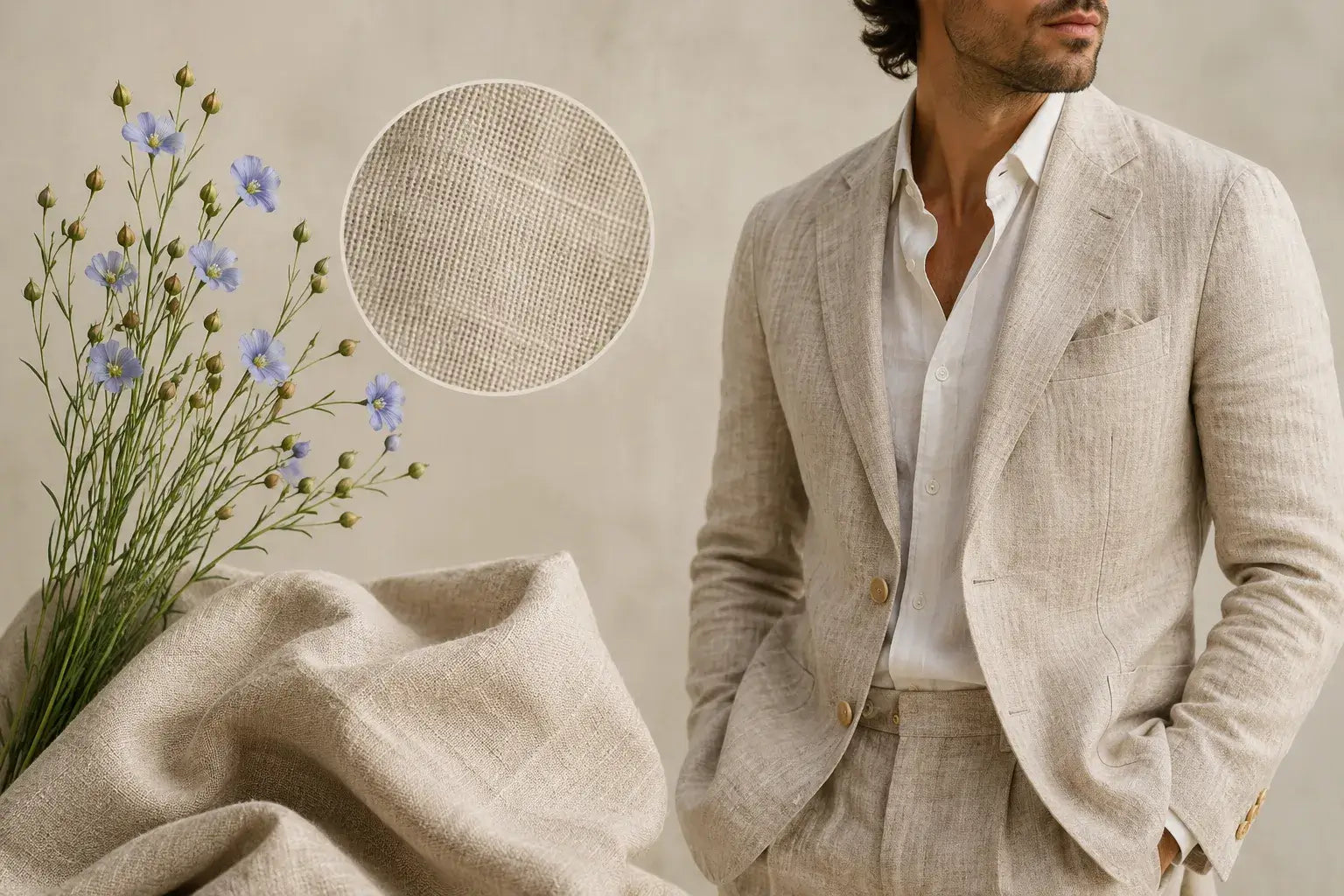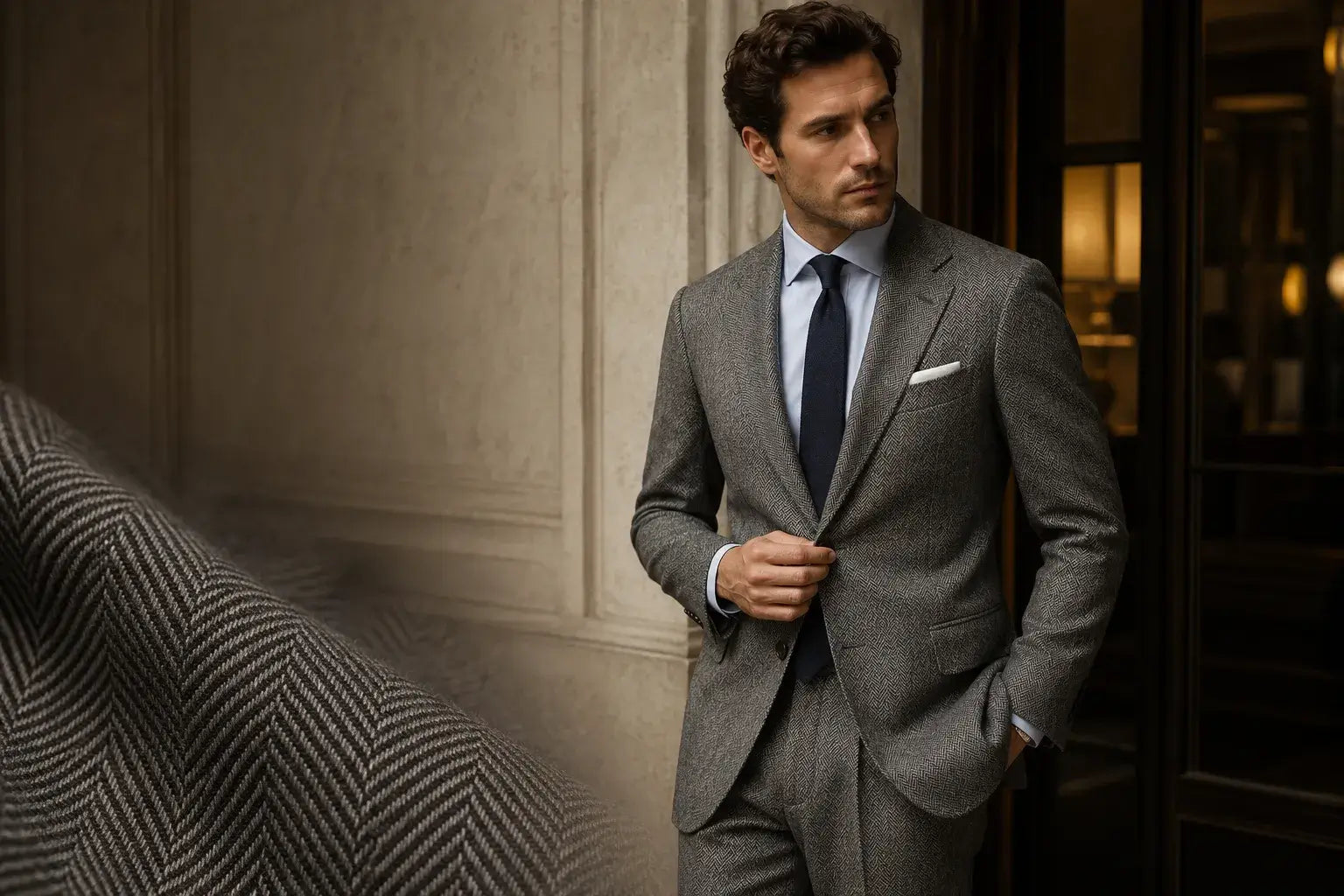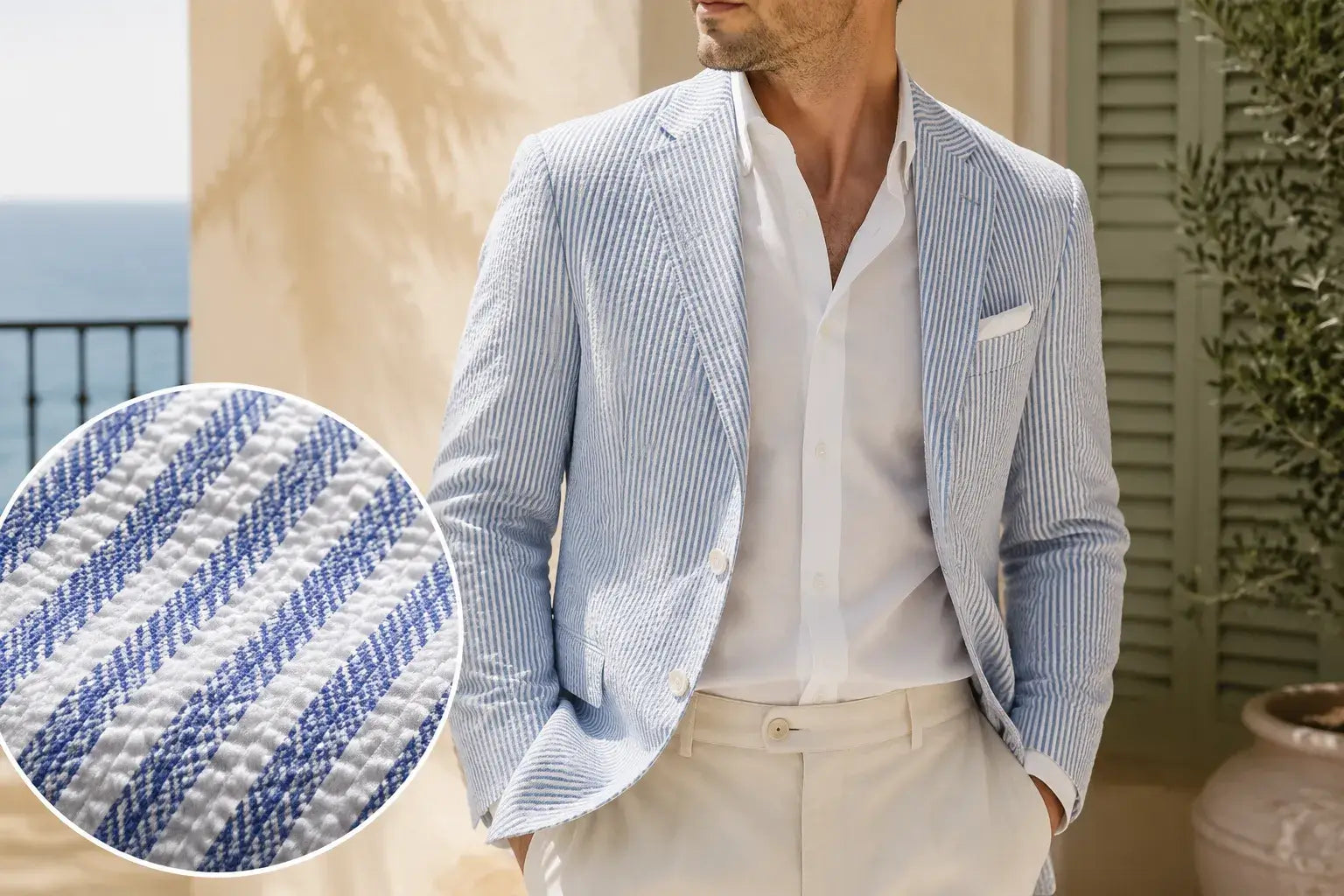

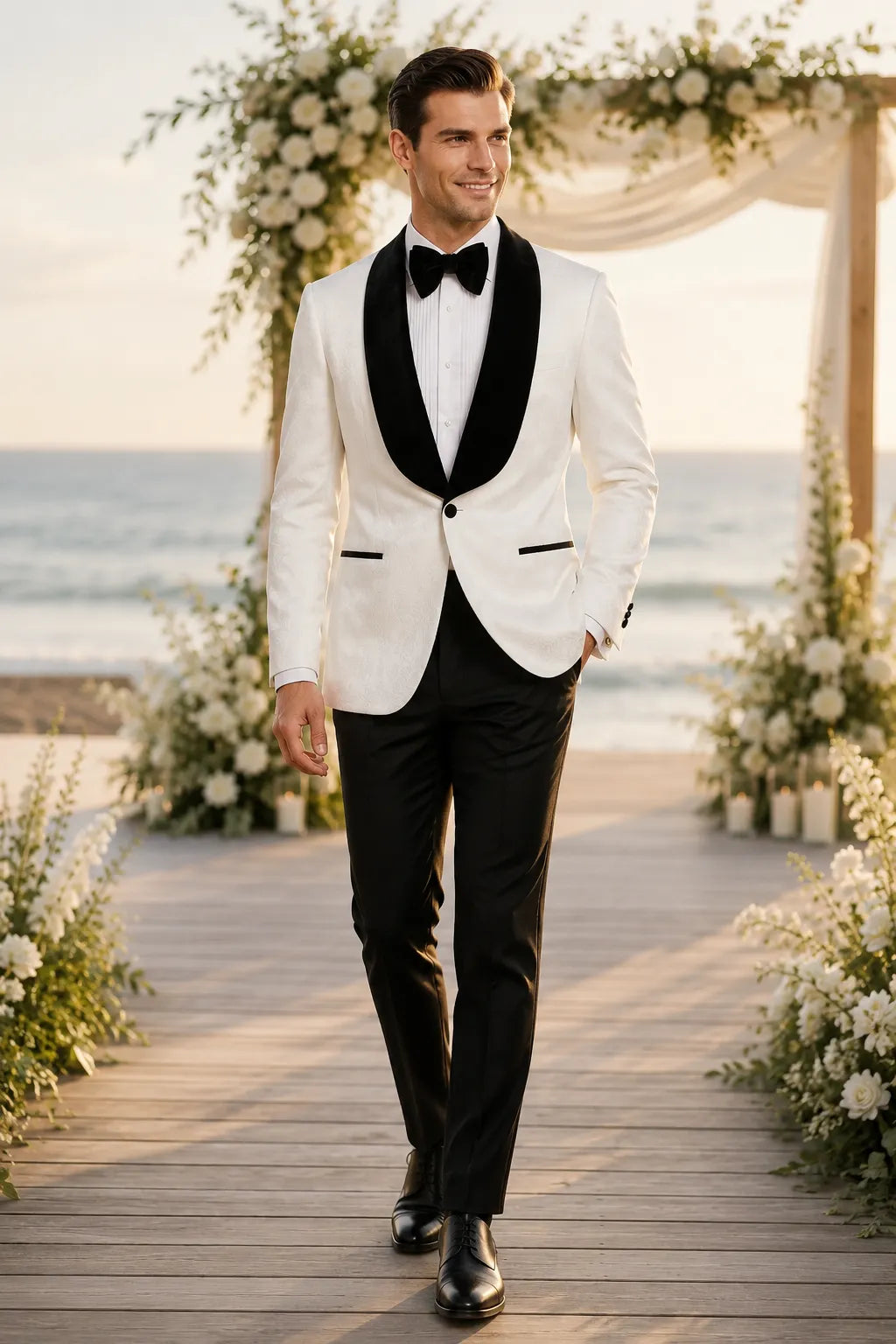

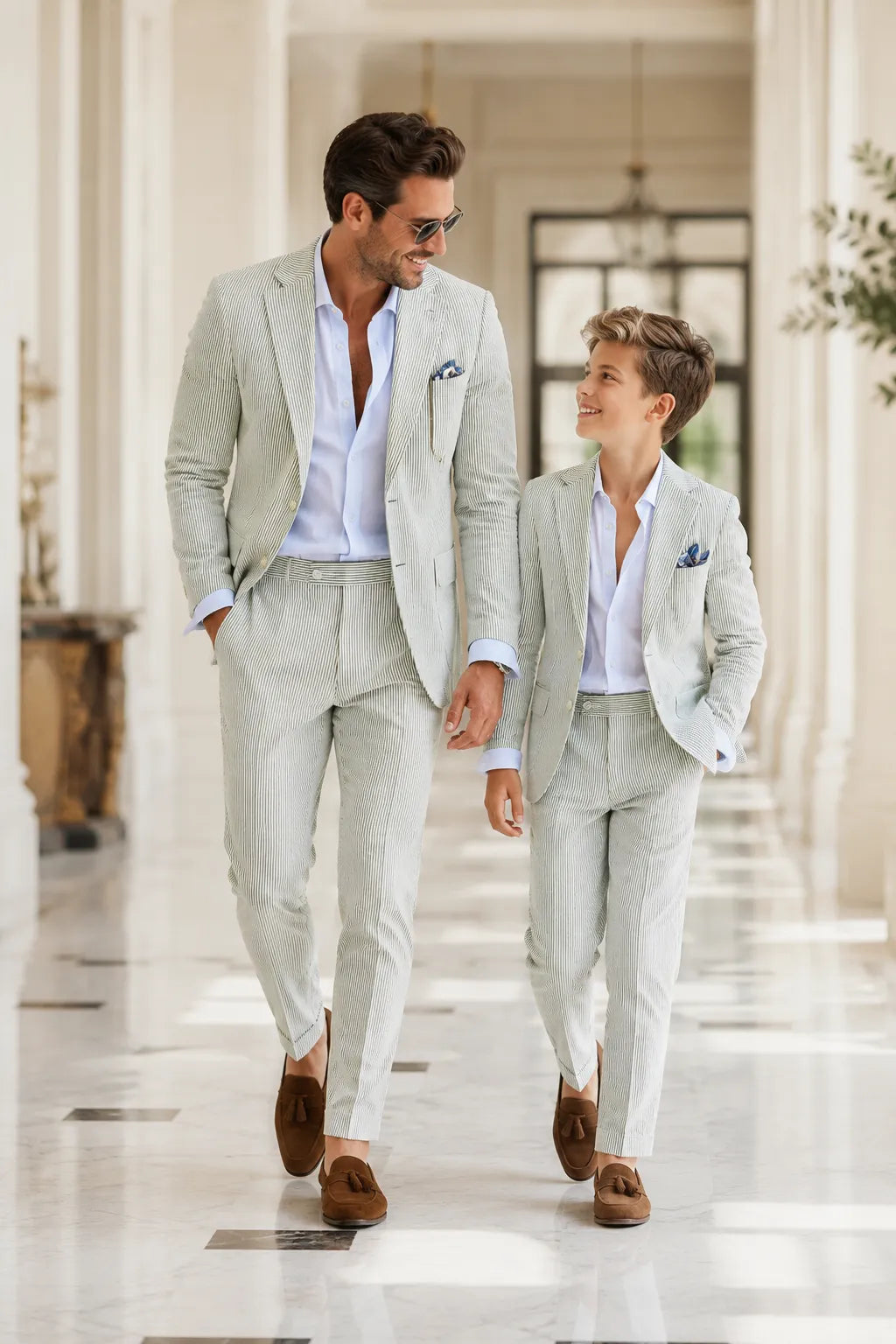

Linen is a natural fabric made from fibers taken from the stem of the flax plant.
Those fibers are separated from the surrounding plant material, prepared, spun into yarn, and woven into linen cloth.
That plant-based structure helps explain many of linen's familiar characteristics: a crisp hand, visible texture, strength, moisture handling, and a tendency to crease during wear.
This guide explains what linen actually is, how flax becomes fabric, why linen behaves the way it does, and what those properties mean when linen is used in clothing.
What You'll Learn
Quick Answer: What Is Linen Made Of?

Linen is made from flax fiber.
More specifically, textile fibers are obtained from the stem of the flax plant, commonly Linum usitatissimum. Those fibers are processed before being spun into yarn and made into linen fabric.
Merriam-Webster defines linen as cloth or yarn made from flax, while The Metropolitan Museum of Art explains that cellulose fibers inside the flax stem can be transformed into textile material.
So if you are asking:
- What is linen made of?
- What material is linen?
- What is linen cloth made of?
The short answer is:
Flax fiber.
A finished garment does not necessarily have to be 100% linen, however. Linen can also be blended with cotton or manufactured fibers, which is why the fiber-content label matters more than appearance alone.
What Is Linen Fabric?
Linen fabric is cloth made from flax fiber.
The word linen can describe several stages of the textile depending on context:
- Linen fiber: prepared textile fiber obtained from flax.
- Linen yarn: flax fibers that have been spun into yarn or thread.
- Linen fabric: cloth constructed from linen yarn.
The University of Georgia Extension classifies linen, or flax, as a natural cellulosic fiber.
That places linen within the broader group of plant-derived textile fibers rather than synthetic materials such as polyester.
Consumers often use linen material and linen fabric interchangeably. For clothing, the more useful question is usually not which term to use, but how much linen the finished textile actually contains.
Where Does Linen Come From?
Linen comes from the flax plant.
Flax is a bast fiber, meaning the useful textile fibers are associated with the plant stem. This differs from cotton, where usable fibers grow around the seeds.
The Food and Agriculture Organization groups flax among bast or stem fibers, while The Met describes cellulose fibers inside the flax stem as the source material for linen.
The basic relationship is:
Flax plant → flax fiber → linen yarn → linen fabric
This is why flax and linen are closely related but are not exactly the same thing.
Flax is the plant and fiber source. Linen is the textile made from that fiber.
How Flax Becomes Linen Fabric

Turning flax into linen requires several stages.
The exact process can vary, but the purpose remains the same: separate the useful fibers from the stem, clean and align them, spin them into yarn, and turn that yarn into cloth.
A simplified process looks like this:
Harvesting → retting → breaking and scutching → hackling → spinning → weaving → finishing
1. Harvesting
Flax is grown until it reaches the stage suitable for fiber production.
Fiber quality can be influenced by plant variety, growing conditions, harvesting, and later processing, so the final linen fabric is affected long before weaving begins.
2. Retting
The useful fibers are held within the flax stem.
Retting helps break down or loosen the plant tissues surrounding those fiber bundles so they can later be separated more efficiently.
Traditional methods may use moisture and biological activity to help release the fibers from the surrounding stem material.
Retting does not create flax fiber. It helps release fibers that are already present inside the stem.
That distinction matters because linen begins with the natural fiber structure of the plant rather than with a fiber manufactured during textile processing.
3. Breaking And Scutching
After retting and drying, the woody portions of the stem need to be removed.
Breaking fractures the unwanted stem material.
Scutching helps remove those broken woody pieces while retaining the usable flax fibers.
4. Hackling
The remaining fibers are combed and aligned.
Historic flax combs preserved by The Metropolitan Museum of Art show how rows of pins were used to separate and refine flax before spinning.
Hackling helps organize longer fibers into more workable strands while removing shorter or unwanted material.
5. Spinning
Prepared flax fibers are twisted into yarn or thread.
The thickness and uniformity of the yarn influence how the finished linen fabric looks and feels.
Fine clothing linen and heavier furnishing linen, for example, do not need to use identical yarn.
6. Weaving And Finishing
The yarn is then woven into fabric.
The cloth may later be washed, softened, dyed, bleached, or otherwise finished depending on its intended use.
This explains why two fabrics can both be labelled 100% linen while still feeling noticeably different.
Fiber composition matters, but so do:
- yarn thickness
- weave
- fabric weight
- dyeing
- finishing
- garment construction
The label tells you what the textile is made from.
It does not tell you everything about the finished fabric.
For a visual look at how flax moves from plant fiber to finished linen cloth, this manufacturing overview shows the main stages from fiber preparation through spinning and weaving.
What Does Linen Fabric Feel Like?

Linen generally has a crisp, dry, lightly textured hand rather than a fuzzy or brushed surface.
Fresh linen can feel firmer than some shoppers expect, particularly when compared with soft knit cotton or brushed fabrics.
Common characteristics include:
- a crisp or dry hand
- subtle surface texture
- restrained natural sheen
- visible movement creases
- more structure in heavier fabrics
Linen should not automatically feel rough.
A coarse, heavy linen and a finely spun, carefully finished linen can feel very different even when both are made entirely from flax.
The Met notes that flax has historically been used to produce textiles ranging from relatively coarse material to exceptionally fine cloth.
So 100% linen does not describe one single hand feel.
Weave, yarn, finishing, and fabric weight still matter.
Why Does Linen Wrinkle So Easily?

Linen wrinkles easily because the fiber has relatively low elasticity and limited wrinkle recovery.
When the fabric is bent, folded, compressed, or sat on, it does not return to its previous shape as readily as a more elastic textile.
Utah State University Extension identifies poor elasticity and easy wrinkling among linen's disadvantages, while the University of Georgia Extension also notes its poor wrinkle resistance.
This helps explain why creases around areas such as the elbows, lap, waist, trouser seat, and knees remain visible during wear.
Visible wrinkling therefore does not automatically indicate poor-quality linen.
From a clothing perspective, the more useful question is:
How much natural creasing is appropriate for the garment and occasion?
A casual linen shirt can look completely appropriate with visible wrinkles.
A linen suit for a wedding or formal summer event should begin clean and pressed, but expecting it to remain as smooth as a worsted wool suit throughout an entire day is unrealistic.
Fabric weight, blends, finishing, and garment construction can all change how noticeable the wrinkles become.
Is Linen A Natural Fabric?
Yes. Linen made from flax is a natural plant-derived cellulosic fiber.
It is fundamentally different from synthetic fibers such as polyester.
However:
Natural does not automatically mean sustainable.
The environmental impact of a finished textile can also depend on cultivation, processing, dyeing, manufacturing, transportation, garment lifespan, and care.
It is therefore accurate to describe linen as a natural plant fiber.
It is less accurate to assume that every linen garment has the same environmental footprint simply because flax is its original source.
Why Linen Works Well For Clothing And Warm Weather

Linen is strongly associated with summer clothing, but simply saying that "linen is cool" leaves out an important part of the story.
The University of Georgia Extension identifies moisture handling, relatively quick drying, strength, and a natural soft sheen among linen's characteristics.
Those fiber properties help explain why linen appears so frequently in warm-weather clothing.
Moisture Handling
Linen can absorb and manage moisture.
That can be useful in warm or humid conditions when perspiration becomes part of clothing comfort.
Relatively Quick Drying
Linen also dries relatively quickly after taking on moisture.
That characteristic contributes to its long association with summer shirts, trousers, dresses, and tailoring.
Strength
Linen is a relatively strong natural fiber.
That does not make every linen garment automatically durable. Weave, abrasion, construction, fit, and care still influence how long the finished product lasts.
Garment Construction Still Matters
The word linen on a label does not guarantee that a garment will feel cool.
A lightweight, loosely constructed linen garment can behave very differently from a dense linen fabric used in a heavily lined jacket.
When choosing clothing for hot weather, consider:
- fabric weight
- weave density
- lining
- jacket construction
- fit
- number of layers
- temperature and humidity
A heavy, fully lined linen jacket may feel warmer than a lightweight garment made from another suitable summer textile.
For a more tailoring-focused explanation, see our guide to linen suits for summer.
To see how these fabric characteristics translate into men's clothing, this linen guide looks at texture, wrinkling, fabric weight, summer comfort, and the way linen is used in suits and other warm-weather garments.
100% Linen vs Linen Blend

Not every garment containing linen is made entirely from linen.
100% linen means linen is the stated textile fiber without another fiber blended into the fabric.
A linen blend combines linen with one or more other fibers.
Neither is automatically better.
100% Linen
Pure linen preserves more of the characteristics traditionally associated with flax.
That often means more noticeable:
- natural texture
- surface variation
- crispness
- creasing
It can be a good choice when the traditional appearance and behavior of linen are part of what you want from the garment.
Linen Blends
Linen can be combined with another fiber to alter the behavior of the finished textile.
A cotton-linen fabric combines two plant-derived fibers, while other blends may be designed to change qualities such as:
- softness;
- drape;
- stretch;
- structure;
- wrinkle behavior.
The percentages matter.
So do yarn, weave, fabric weight, finishing, and construction.
Instead of asking:
Is 100% linen always better?
A more useful question is:
Does this fiber composition suit the garment and how I plan to wear it?
Linen vs Cotton: Quick Comparison

Linen and cotton are both plant-derived cellulosic fibers, but they come from different plants and different parts of those plants.
Linen comes from flax stems.
Cotton fibers grow around cotton seeds.
Neither is automatically better for every garment.
A lightweight cotton shirt may be more comfortable in one setting than a heavy, fully lined linen jacket.
If you are choosing specifically between the two for tailoring, read our linen suit vs cotton suit comparison.
What Is Linen Used For?
Linen has been used as a textile for thousands of years and remains common in both clothing and household fabrics.
Modern uses include:
- shirts
- trousers
- shorts
- dresses
- skirts
- jackets
- suits
- bedding
- table textiles
- decorative fabrics
In menswear, linen is especially common in warm-weather shirts, trousers, jackets, summer suits, resort tailoring, and wedding clothing.
Its texture generally feels less rigid than smooth business suiting, which can make linen useful when traditional wool tailoring feels too formal or visually heavy for the setting.
This is one reason linen appears frequently in destination and outdoor wedding attire. For more specific examples, see our guide to linen suits for beach weddings.
For finished tailored options, explore Wehilion's linen suits for men.
What Are The Downsides Of Linen?
A useful fabric guide should explain the limitations as clearly as the advantages.
Wrinkling Does Not Suit Every Dress Code
Linen's natural creasing is normal, but not every setting welcomes a relaxed surface.
If you need a consistently smooth corporate appearance throughout a long day, traditional linen may require more tolerance for wrinkles than you prefer.
Linen Often Looks More Relaxed
Texture and creasing reduce some of the visual rigidity associated with traditional business wool.
That can work very well for a summer wedding or resort dinner while being less appropriate for a conservative office.
Linen Is Not Automatically The Coolest Choice
Comfort depends on more than fiber content.
A dense or heavily lined linen garment may feel warmer than a lightweight garment made from another appropriate summer textile.
"Linen" Does Not Tell You Everything
Two garments can both be 100% linen and still feel very different.
Weight, weave, finishing, lining, construction, and fit all influence the finished result.
How To Check Whether Clothing Is Made From Linen
The most reliable starting point is the fiber-content label, not appearance alone.
Many fabrics can be woven or finished with visible texture designed to resemble linen.
If a label states:
100% Linen
the stated fiber composition is entirely linen.
If it states:
55% Linen / 45% Cotton
the textile is a linen-cotton blend.
The percentage matters because a garment containing a small amount of linen may behave very differently from one in which linen is the dominant fiber.
When shopping online, look for clearly stated fiber percentages.
Terms such as linen look, linen feel, or linen texture may describe appearance rather than confirm that flax fiber is actually present.
How To Care For Linen
Linen care varies according to fiber blend, dye, finishing, and garment construction.
Always follow the sewn-in care label rather than assuming every linen item can be washed, dried, or pressed in the same way.
The University of Georgia Extension likewise recommends following permanent care-label instructions for linen.
This is particularly important with tailoring.
An unstructured linen shirt and a lined linen suit jacket may require very different care even when linen is the main fiber in both.
What To Check On A Linen Clothing Label
When evaluating linen clothing, focus on five things.
1. Fiber composition
Does the label actually identify linen?
2. Linen percentage
Is the fabric 100% linen or part of a blend?
3. Other fibers
If it is blended, what other fibers are present and in what proportions?
4. Garment construction
For jackets and suits, lining and internal structure can substantially affect how the finished garment feels.
5. Care instructions
Make sure the required care suits the way you intend to wear and maintain the garment.
The fiber label is important, but it is only one part of evaluating clothing.
Final Takeaway
Linen is a natural fabric made from fibers taken from the stem of the flax plant. Turning flax into linen requires several stages of fiber separation, cleaning, spinning and weaving, which give the finished fabric its recognizable texture and character.
For clothing, linen is valued particularly for warm-weather wear, although its tendency to crease is part of the material rather than something that can be completely avoided. Pure linen gives the most characteristic linen feel, while blends can change softness, structure and wrinkle resistance.
If you are choosing linen for tailoring, look beyond the fiber name alone. Fabric weight, weave, lining and construction all influence how a linen suit feels and performs.
Explore our Linen Suits for Men for warm-weather tailoring designed for weddings, summer events and relaxed formal occasions.