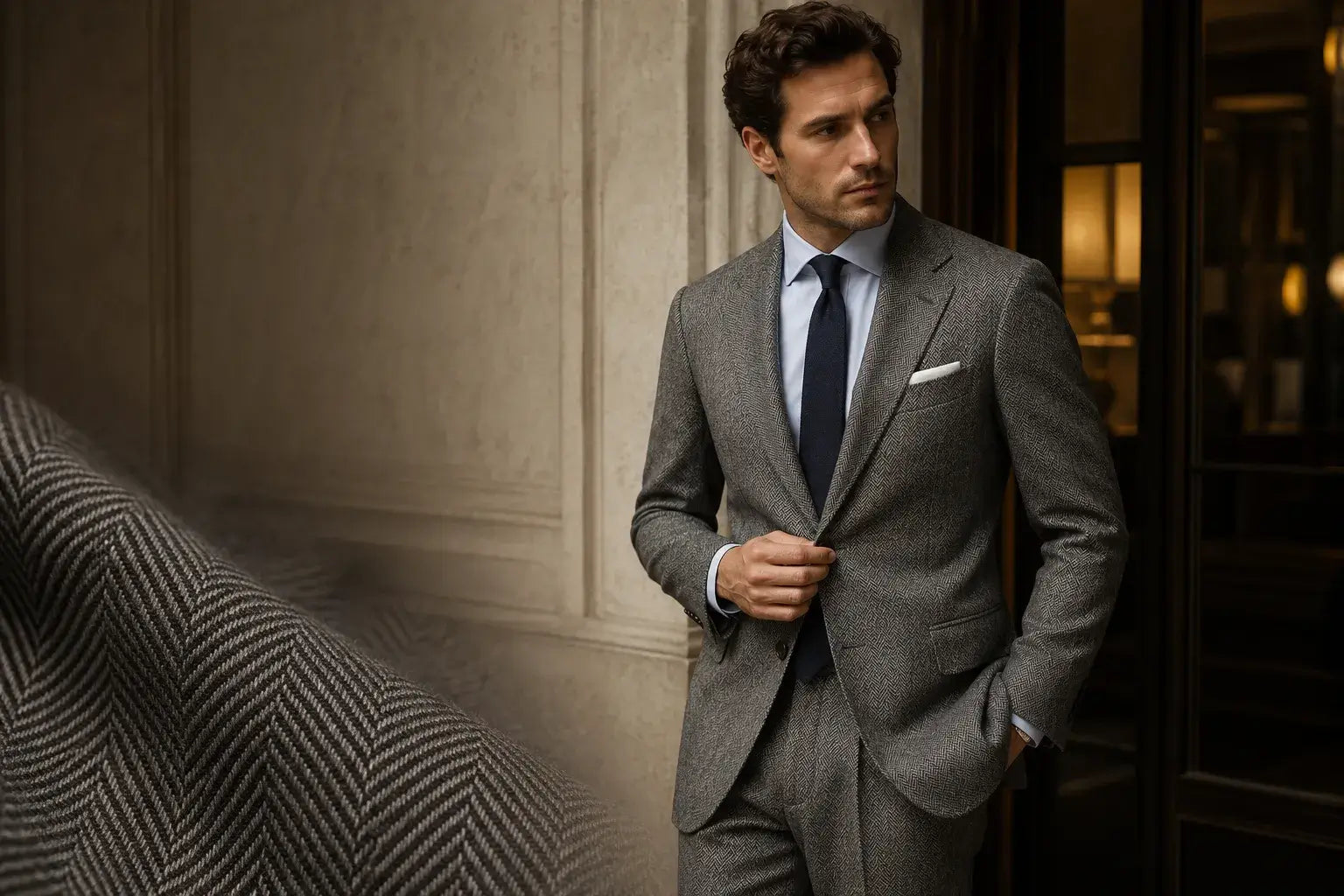


A herringbone suit is for men who want texture without wearing a loud pattern.
It is not a pinstripe, plaid, or printed zigzag. A true herringbone suit gets its character from a woven broken V-shaped texture that looks similar to fish bones.
That texture gives the suit more depth than a plain wool suit, but it usually feels quieter and easier to wear than bold checks or plaid.
But not every herringbone suit works for every setting. A brown herringbone tweed suit feels warm, vintage, and seasonal. A navy or grey wool herringbone suit feels cleaner and more business-friendly. A herringbone 3 piece suit can look refined, but the wrong fabric or fit can make it feel heavy.
This guide explains what a herringbone suit is, how the herringbone pattern works, which fabrics and colors to choose, and when men should wear this classic textured suit.
What You'll Learn
Use this guide to decide whether a herringbone suit fits your wardrobe, your season, and your occasion.
Start with the quick answer, then use the fabric, color, and fit sections before choosing a herringbone suit.
Quick Answer
A herringbone suit is a men's suit made from fabric with a broken V-shaped pattern. The pattern usually looks like repeated fish bones or small chevrons running through the cloth.
The best herringbone suits are usually woven, not simply printed.
That woven texture is what makes herringbone feel richer than a flat plain suit. It catches light softly, adds depth to the fabric, and gives the suit a classic menswear character.
For most men, the safest first choice is a grey, navy, or brown herringbone suit with a fine pattern and a clean fit.
Choose wool if you want versatility. Choose tweed if you want autumn, winter, rustic, or vintage character. Choose linen or linen blend if you want a lighter warm-weather version.
What Is A Herringbone Suit?

A herringbone suit is a suit made from fabric with a herringbone pattern.
Merriam-Webster defines herringbone as a twilled fabric with a distinctive pattern, which is why a good herringbone suit should be judged by texture as much as by color.
The pattern forms a repeated broken V shape. From a distance, it may look like a subtle stripe. Up close, you can see the diagonal lines changing direction.
That is the difference.
A pinstripe suit has clean vertical lines. A plaid suit has crossing horizontal and vertical lines. A herringbone pattern suit has a textured broken twill effect that looks more dimensional.
For men who want texture without a loud pattern, a herringbone suit is a strong alternative to plain wool tailoring or bold plaid.
It works especially well when you want the suit to feel classic, seasonal, and slightly more interesting than a smooth solid fabric.
What Does Herringbone Mean? Pattern, Fabric And Weave Explained

Herringbone gets its name from the skeleton of a herring fish.
The pattern looks like small repeated bones, with diagonal lines meeting and reversing direction in a regular broken V shape. That is why people often describe it as a fishbone pattern, zigzag pattern, or chevron-like texture.
In menswear, though, herringbone should not be treated like a loud graphic print.
A fine herringbone pattern can almost disappear from across the room. The suit may look like a textured grey, navy, brown, or charcoal suit until the wearer gets closer. Then the broken V pattern becomes visible.
That subtlety is why herringbone works so well in tailoring: it gives the suit texture without making the outfit difficult to wear.
Is Herringbone A Pattern Or Fabric?
It can be both.
Herringbone is a pattern, but in classic clothing it is often created through the structure of the fabric. In woven menswear, herringbone is commonly associated with broken twill.
The Pratt Textile Research Lab describes herringbone as a broken twill weave, where the direction of the twill shifts in parallel columns. That shift creates the familiar V-shaped effect.
This is why a good herringbone suit should not feel like a flat printed pattern.
The cloth should have depth. The V shape may look sharper in close-up and softer from a distance. As light moves across the fabric, the texture can shift slightly instead of looking static.
Compared with louder patterned suits, herringbone usually reads quieter because the pattern is built into the fabric rather than relying on strong color contrast.
For a visual explanation of how the herringbone weave creates its broken V-shaped effect, this short fabric guide is a useful companion before comparing real herringbone with printed zigzag patterns.
Real Herringbone vs Printed Zigzag
Not every V-shaped pattern is the same.
A real herringbone suit usually shows texture in the cloth. Look closely and you should see diagonal lines reversing direction in a regular pattern.
A printed zigzag may copy the look from a distance, but it will not give the same depth, shadow, or woven character. The Vintage Fashion Guild describes herringbone as one of the best-known broken twills, which helps explain why true herringbone has more structure than a simple surface graphic.
Use these checks before buying:
The easiest test is light.
Turn the fabric slightly. A woven herringbone pattern should shift with the light because the texture is part of the cloth. A flat printed zigzag usually looks more static.
This difference matters more in suits than in casual clothing.
A woven herringbone pattern looks refined because it adds depth. A flat printed imitation can make the suit look cheaper and less versatile.
Herringbone Suit Fabric Guide: Tweed, Wool And Linen

Fabric decides how formal, warm, structured, and seasonal a herringbone suit feels.
The pattern may be the same, but a wool herringbone suit, a herringbone tweed suit, and a linen herringbone jacket do not serve the same purpose.
Do not choose herringbone by pattern alone.
Look at weight, drape, texture, and occasion.
A fine wool herringbone can work for business. A heavy tweed herringbone belongs more naturally in autumn or winter. A linen blend herringbone jacket can look excellent in warm weather, but it will not feel as formal as wool.
Wool Herringbone Suit
A wool herringbone suit is usually the safest first choice.
Wool gives the suit enough polish for business, weddings, dinners, and formal daytime events. The herringbone pattern adds texture, while the wool keeps the overall look refined.
This is why many classic wool suits work well in grey, charcoal, navy, and dark brown.
Choose a fine herringbone if you want versatility.
A smaller pattern is easier to wear repeatedly because it does not dominate the outfit. It also pairs better with plain shirts, solid ties, and simple leather shoes.
If you want a practical cool-weather option, the Men's Winter Herringbone 2 Piece Suit is an easy starting point because it keeps the herringbone texture wearable without adding the extra formality of a vest.
Herringbone Tweed Suit
A herringbone tweed suit feels heavier, warmer, and more traditional.
This is the version most people associate with autumn weddings, countryside events, rustic ceremonies, vintage outfits, and winter tailoring.
Brown, grey, olive green, and muted earth tones work especially well in tweed because the texture supports the seasonal character.
A herringbone tweed suit is not trying to look sleek in the same way as a smooth worsted wool business suit. Its strength is depth, warmth, and character.
For colder months, tweed suits for men are a strong choice when you want more texture than plain wool.
For a richer autumn or rustic wedding look, the Men's Brown Herringbone Tweed 3-Piece Suit gives the pattern more depth and makes the waistcoat feel intentional rather than decorative.
The mistake is wearing heavy tweed where it does not belong.
A thick herringbone tweed suit can look excellent in November. It can feel heavy and out of place on a hot summer afternoon.
Linen Herringbone Suit Or Jacket
A linen herringbone suit or linen blend herringbone jacket is a lighter interpretation of the pattern.
It is less formal than wool and less rugged than tweed. That makes it better for warm-weather separates, smart casual dressing, summer events, and relaxed tailoring.
The texture works best when the construction stays light.
A linen herringbone jacket can pair well with chinos, linen trousers, lightweight cotton pants, and an open-collar shirt. It should feel easy, not stiff.
For summer, compare herringbone linen options with linen suits for men before deciding. Linen gives a more relaxed drape, while herringbone adds visual structure.
The key is balance.
If the cloth is too soft, the jacket may collapse. If it is too heavy, it loses the warm-weather advantage.
Herringbone Suit Color Guide

Color changes how formal herringbone feels.
The same pattern can look business-ready in charcoal, vintage in brown, modern in navy, and more seasonal in green.
For a first herringbone suit, grey, navy, and brown are usually safer than black or bright blue. They give the pattern room to look classic instead of loud.
A brown herringbone suit is the warmest and most vintage-looking option, especially in tweed or wool blend. It works best for autumn weddings, rustic settings, and seasonal smart casual outfits.
A grey herringbone suit is usually the easiest first choice because the texture stays subtle enough for business, weddings, and repeat wear.
A navy herringbone suit feels cleaner and more modern than brown, while charcoal looks sharper for winter business and formal events.
Black herringbone is the hardest color to use. It can look sharp, but it is not black tie. If the event requires black tie, choose a proper tuxedo instead.
Recommended Herringbone Suit Picks
If you already know the color direction you want, these options fit different styling needs:
Keep the product choice tied to the setting. Brown and green feel more seasonal. Charcoal feels sharper and more formal. Grey and navy are safer if you want maximum repeat wear.
2 Piece vs 3 Piece Herringbone Suit

A two-piece herringbone suit and a three-piece herringbone suit send different messages.
A 2 piece herringbone suit is easier to wear. It works for office settings, wedding guests, dinners, and smart casual outfits. It gives you texture without making the outfit feel too dressed up.
A 3 piece herringbone suit feels more formal and more vintage. The waistcoat makes the look stronger, especially when the fabric is tweed or wool.
The best reason to choose a herringbone 3 piece suit is intention.
It should look like you chose the waistcoat because it supports the fabric and occasion. It should not look like an extra piece added only for decoration.
If you like the formal side of the pattern, 3 piece suits for men are worth comparing because the vest changes the whole mood of the outfit.
Just be careful with bulk.
A thick three-piece tweed herringbone suit can look excellent on a tall frame in cold weather. On a smaller frame, or in a warm indoor setting, it may feel too heavy.
The Fit Test: Texture Without Bulk

Fit matters more with herringbone because the pattern exposes tension.
If the jacket pulls across the chest, the broken V shape bends. If the trousers are too tight, the texture looks strained. If the jacket is too loose, the pattern can make the suit look bulky.
A good men's herringbone suit should look structured, not stiff.
Use this fit test before buying:
The shoulder should sit cleanly.
The chest should close without pulling.
The waist should have shape without forcing the button.
The trousers can be tapered, but they should not be skinny. Herringbone already has texture, so tight trousers can make the suit look busier than intended.
This is especially important with tweed.
Heavy herringbone tweed needs room to behave like a real fabric. If it is cut too tight, the suit loses the relaxed authority that makes tweed appealing.
When To Wear And How To Style A Herringbone Suit

A herringbone suit is not only about the pattern.
It is about matching the pattern, fabric, color, and setting.
For business, choose navy, grey, or charcoal wool herringbone. Keep the pattern fine and the shirt simple.
For weddings, match the fabric to the season. A brown herringbone tweed suit can look excellent at an autumn or countryside ceremony, while a navy wool herringbone suit feels more polished for a city wedding.
For autumn or rustic ceremonies, herringbone can be a strong alternative to smoother wedding suits for men, especially in brown, grey, or navy.
For smart casual outfits, consider a herringbone jacket instead of a full suit. Wear it with chinos, tailored trousers, or dark denim depending on the setting.
For black tie, do not treat herringbone as a tuxedo replacement. A black herringbone suit may look elegant, but formal evening dress codes require proper eveningwear.
If you want to see how herringbone or tweed texture works in real outfits, this styling video gives a practical look at wearing a herringbone blazer without making the rest of the outfit too busy.
Shirts, Shoes And Accessories
Because herringbone already has texture, keep the rest of the outfit quieter.
A crisp dress shirt in white, light blue, or cream is usually safer than a bold patterned shirt.
Solid ties work well. So do knitted ties, wool ties, and subtle textured ties. Avoid pairing a strong herringbone suit with a loud striped shirt and a busy tie at the same time.
For shoes, use the suit color as your guide.
Brown herringbone suits work well with dark brown derbies, brogues, or boots. Grey herringbone suits can take black or dark brown shoes. Navy herringbone suits usually look good with brown, burgundy, or oxblood. Black herringbone suits should stay with black shoes.
The pocket square should be simple.
White linen, cream cotton, or a muted pattern is usually enough.
Common Mistakes And Buying Checklist
The first mistake is treating herringbone like a stripe.
It is not a simple stripe. It has direction, texture, and shadow. That means the rest of the outfit should stay quieter.
The second mistake is choosing a pattern that is too large.
A wide herringbone can look great on an overcoat, but it may feel bulky on a suit. For most men, fine or medium herringbone is easier to wear.
The third mistake is wearing heavy tweed in warm weather.
A herringbone tweed suit belongs in autumn and winter. It does not belong at a hot outdoor summer event.
The fourth mistake is going too tight.
Herringbone needs the pattern to sit cleanly across the chest, waist, and trousers. If the fabric pulls, the broken V shape bends and the suit looks strained.
The fifth mistake is using black herringbone as black tie.
A black herringbone suit may be elegant, but it is still not a tuxedo.
Before buying a herringbone suit, check more than color.
The right suit should match your season, body, dress code, and wardrobe.
- Pattern: The herringbone pattern looks woven, not flat or printed.
- Scale: The pattern scale suits the occasion.
- Weight: The fabric weight matches the season.
- Tailoring: The fabric feels substantial enough for tailoring, not like shirt fabric.
- Fit: The shoulder and chest sit cleanly without pulling the V pattern.
- Distance: The suit still looks clean from a distance, not only interesting up close.
- Color: Grey, navy, brown, or charcoal are usually the safest first choices.
- Formality: A 3 piece version adds formality without looking bulky.
- Styling: Shirts and ties stay quieter than the suit texture.
- Dress code: The suit fits the setting, not just the photo you liked.
A herringbone suit works best when the pattern, fabric weight, color, and fit all support the same setting.
Explore Wehilion's herringbone suits for men to compare textured options for business, weddings, autumn events, and smart casual dressing.